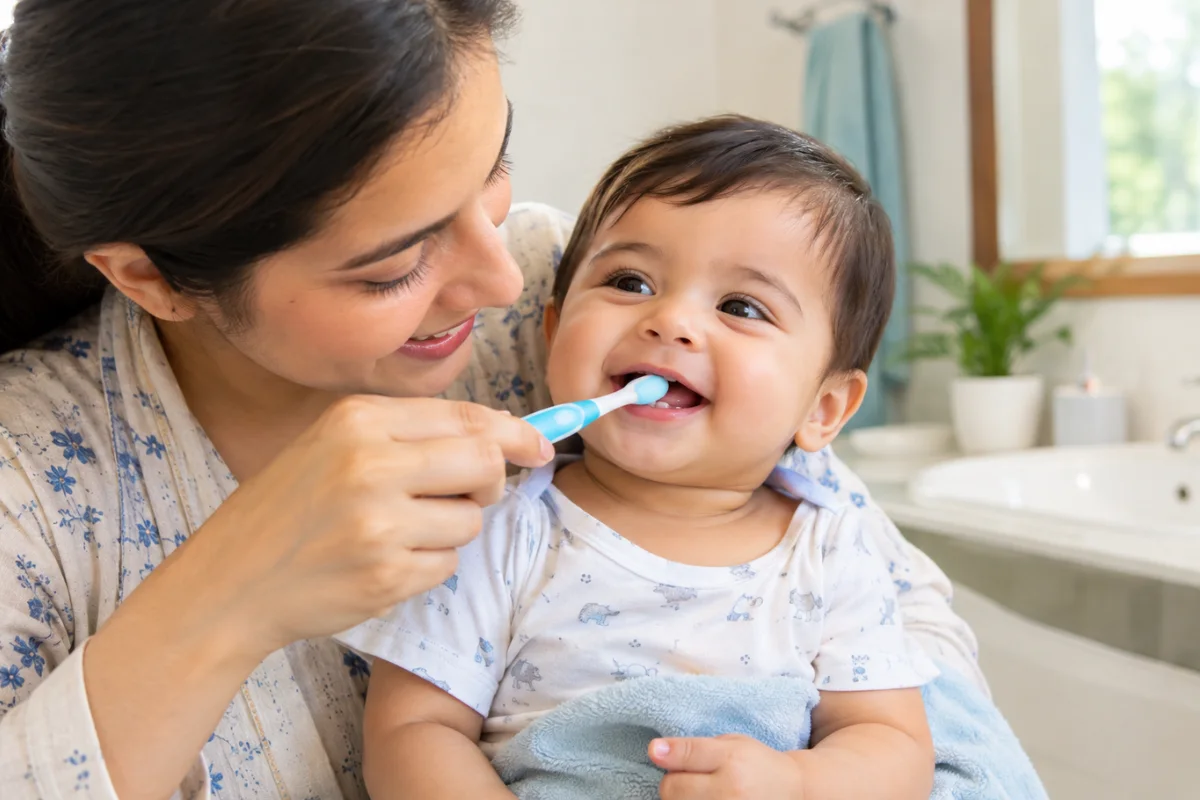
When your baby’s first tooth erupts, it is time to take care of oral hygiene and healthy brushing habits. One of the most common questions parents ask during their baby’s early years is when they should start brushing their baby’s teeth. According to pediatric dental guidance, starting oral care early is important for developing healthy teeth and gums.
In this guide, you will learn when babies should start brushing their teeth, how to care for your baby’s mouth before the first tooth appears, proper brushing techniques, how much fluoride toothpaste to use, when your baby should first see a dentist, and easy tips to keep your baby’s teeth healthy.
When Should Babies Start Brushing Their Teeth?
The short answer is that parents should start brushing their child’s teeth as soon as the first baby tooth erupts.
For most babies, the first tooth appears around six months of age, although the timing can vary from one child to another. Once the first tooth appears, parents should begin brushing twice a day with a soft-bristled baby toothbrush and a small amount of fluoride toothpaste.
Children younger than 3 years should use a smear of fluoride toothpaste about the size of a grain of rice. Children aged 3 to 6 years should use a pea-sized amount. Parents should help or supervise brushing and use an age-appropriate toothbrush.
Starting early helps establish healthy oral hygiene habits and protects newly erupted teeth from tooth decay.
Why Is It Important to Start Brushing Your Baby’s Teeth Early?
Most parents believe they do not need to brush their baby’s teeth because they are temporary and will eventually be replaced with permanent teeth. However, this is a common misconception. Baby teeth, also known as primary or milk teeth, play an important role in your child’s overall growth and development.
Starting oral care early helps establish healthy oral hygiene habits that can last a lifetime. Regular brushing removes plaque and helps prevent cavities and tooth decay. Healthy baby teeth also help children chew food properly, support clear speech development, and hold space for permanent teeth to grow in the correct position.
Ignoring baby teeth can lead to pain, infections, difficulty eating, and premature tooth loss. Early brushing also helps babies become familiar with a daily oral care routine.
What to Do Before the First Tooth Appears
Before the First Tooth Appears
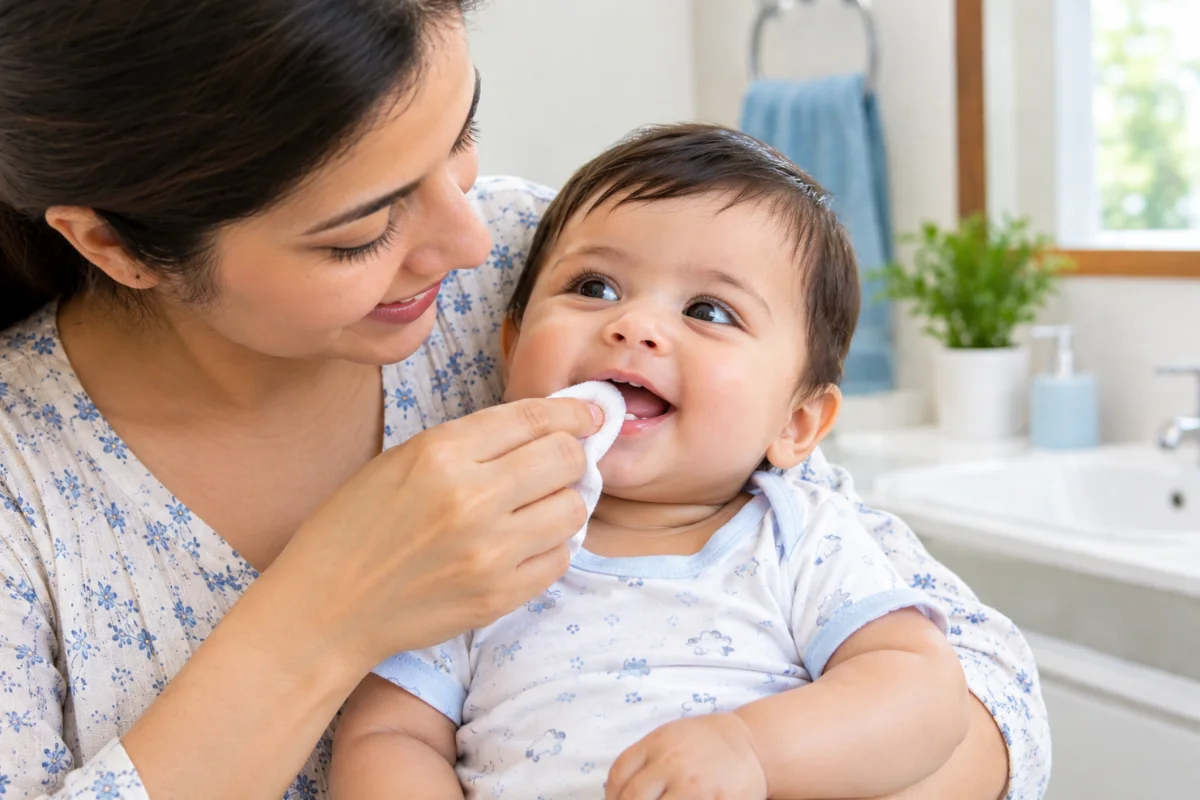
Oral care can start before your baby’s first tooth appears. Parents can gently clean their baby’s gums using a clean, soft, damp gauze pad or washcloth.
At this stage, toothbrushes and toothpaste are not needed. The goal is to keep the mouth clean and help your baby become comfortable with having their mouth cleaned.
The American Academy of Pediatric Dentistry recommends establishing good oral health practices during infancy and establishing a dental home by 12 months of age.
After the First Tooth Erupts
Once your baby’s first tooth appears, start brushing with a soft-bristled baby toothbrush. Brush gently twice a day and use the recommended amount of fluoride toothpaste for your child’s age.
The toothbrush should have a small head that can comfortably reach the surfaces of your baby’s teeth. Replace the toothbrush every three to four months or sooner if the bristles become frayed or worn.
When Should Your Baby First See a Dentist?
Parents should not wait until their child has several teeth before scheduling the first dental visit.
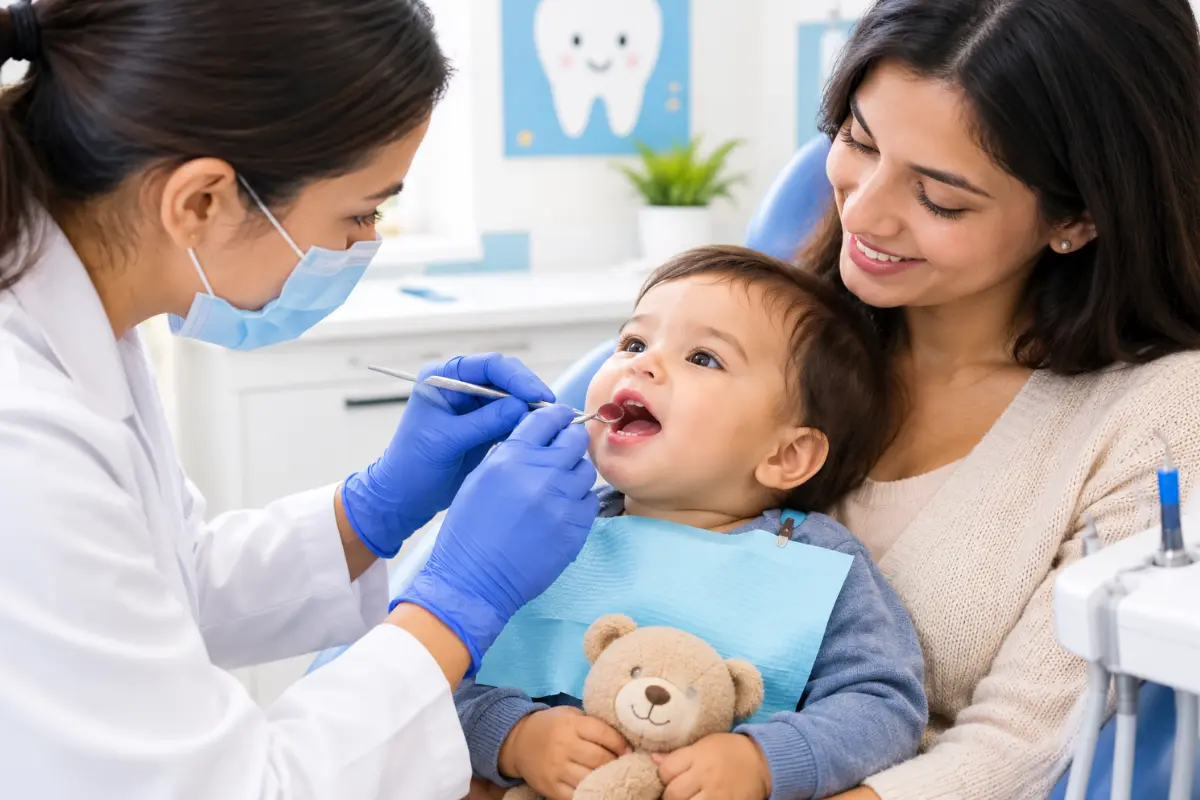
The American Dental Association recommends establishing a dental home by age one, and the American Academy of Pediatric Dentistry recommends a dental home within six months of the first tooth erupting and no later than 12 months of age.
A baby’s first dental visit can help identify early signs of tooth decay, assess oral health, discuss fluoride needs, and give parents guidance on brushing, feeding habits, and other oral health concerns.
Signs Your Baby May Be Teething
Teething and tooth brushing are related, but teething signs are not what determine when brushing should begin. The first visible tooth is the important milestone for starting toothbrushing.
Some common signs of teething include:
- Increased Drooling: Increased drooling is one of the common signs that your baby’s teeth may be coming in.
- Tender or Swollen Gums: Your baby’s gums may appear slightly swollen or tender.
- Chewing on Fingers or Toys: Babies often chew on safe objects to relieve pressure and discomfort in their gums.
- Mild Irritability: Your baby may become fussier than usual because of gum discomfort.
- A Visible Tooth: Once the first tooth breaks through the gums, it is time to begin brushing.
According to the American Academy of Pediatrics, teething does not usually cause a true fever or diarrhea. If your baby develops these symptoms or appears unusually unwell, contact your pediatrician because another illness may be responsible.
Baby Teeth Eruption Timeline by Age
A baby’s tooth eruption varies from one child to another. Most babies get their first tooth around six months of age, although some may get their first tooth earlier or later.
The table below shows a simplified average eruption timeline for primary teeth:
| Baby Tooth | Average Eruption |
|---|---|
| Lower Central Incisors | 6–10 months |
| Upper Central Incisors | 8–12 months |
| Upper Lateral Incisors | 9–13 months |
| Lower Lateral Incisors | 10–16 months |
| First Molars | 13–19 months |
| Canines | 16–23 months |
| Second Molars | 23–33 months |
These ages are average eruption ranges, and individual children may develop teeth at different times. If you have concerns about your child’s tooth development, discuss them with a pediatric dentist.
How to Brush Your Baby’s Teeth Properly
Brushing should begin as soon as your baby’s first tooth erupts. Proper brushing helps remove plaque and protect your baby’s teeth from tooth decay.
Before Brushing
Wash Your Hands
Before brushing your baby’s teeth, wash your hands thoroughly with soap and water. Make sure the toothbrush is clean before each brushing session.
Choose the Right Toothbrush
Parents should use a soft-bristled baby toothbrush with a small head and an easy-to-grip handle. Always choose an age-appropriate toothbrush that is comfortable for your child.
For more detailed information about choosing a toothbrush, see our guide on Best Toothbrush for Kids: How to Choose the Right One.
Use the Correct Amount of Toothpaste
Children under 3 years old should use a smear of fluoride toothpaste about the size of a grain of rice. Children aged 3 to 6 years should use a pea-sized amount.
For a detailed guide to fluoride, ingredients, and age-based toothpaste choices, see Best Toothpaste for Kids: How to Choose the Right One by Age.
Position Your Baby Comfortably
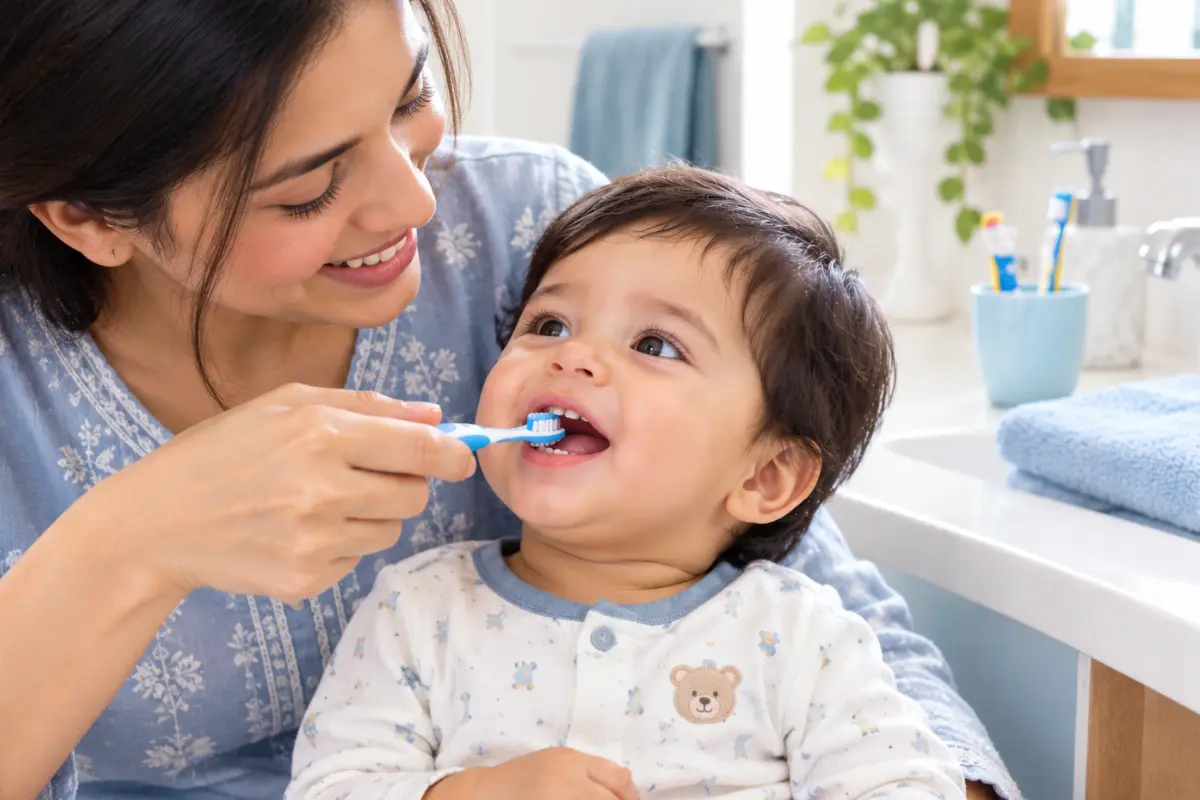
Choose a comfortable position where you can clearly see inside your child’s mouth. You can sit your baby on your lap and gently support their head against your chest.
While Brushing
Brush Gently
Brush gently using small circular motions to clean the front, back, and chewing surfaces of the teeth. Gently clean along the gumline as well.
Brush Twice a Day
Parents should brush their baby’s teeth twice a day, usually in the morning and before bedtime. The ADA recommends brushing for two minutes as a general toothbrushing duration.
Supervise Brushing
Young children need help with brushing because they may not yet have the coordination to clean their teeth effectively. Parents should continue to help or supervise brushing until their child can brush effectively and spit out excess toothpaste.
Make Brushing Positive
Make brushing a positive and enjoyable experience for your baby. Praise your child, smile, sing a simple brushing song, or turn brushing into a fun daily routine.
Replace the Toothbrush
Parents should replace their child’s toothbrush every three to four months or sooner if the bristles become frayed or worn.
How Much Toothpaste Should Babies Use?
The amount of fluoride toothpaste your child needs depends on their age.
| Child’s Age | Recommended Amount of Fluoride Toothpaste |
|---|---|
| Under 3 years | A smear or rice-grain-sized amount |
| 3 to 6 years | A pea-sized amount |
| 6 years and older | Follow age-appropriate guidance and encourage spitting |
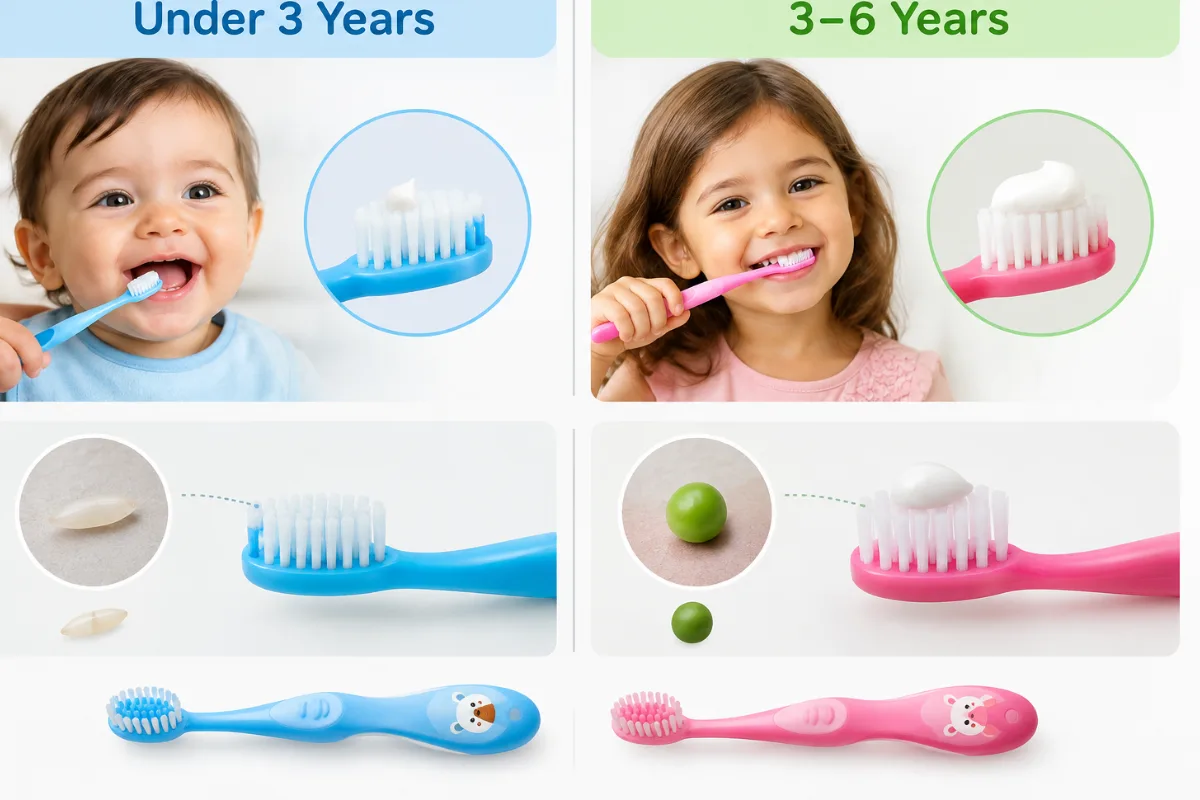
The ADA fluoride toothpaste guidance recommends a rice-sized smear of fluoride toothpaste from the time the first tooth erupts until age 3. From age 3 to 6, children should use no more than a pea-sized amount. Parents should supervise brushing and use the amount recommended for their child’s age.
Should You Brush Your Baby’s Teeth Before or After Feeding?
Once your baby’s first tooth appears, brushing twice a day should become part of the daily routine.
Brushing before bedtime is especially important because it makes brushing the final step of your baby’s nighttime oral care routine whenever possible.
After Feeding
If possible, brushing after the last feeding and before bedtime can help clean the teeth before your baby sleeps.
Before Feeding
If your baby becomes fussy or refuses to brush after feeding, brushing at another consistent time may be easier. The important thing is to maintain a twice-daily brushing routine.
Breastfeeding and Bottle Feeding
Whether your baby is breastfed or bottle-fed, good oral hygiene is important once teeth erupt.
Avoid putting your baby to sleep with a bottle containing milk or formula. Frequent nighttime feeding after teeth have erupted may increase the risk of early childhood caries in some children, so parents should discuss individual feeding and oral care concerns with their pediatric dentist.
Night Feeding and Baby Tooth Decay
During the first year of a child’s life, nighttime feeding is common. However, once teeth erupt, frequent nighttime feeding combined with poor oral hygiene can increase the risk of tooth decay.
AAPD guidance on early childhood caries is influenced by multiple factors, including oral hygiene, feeding practices, dietary habits, fluoride exposure, and individual caries risk.
Breastfeeding and Baby Tooth Decay
Breastfeeding provides many benefits, but maintaining good oral hygiene is still important once the first tooth appears. Parents should continue brushing their baby’s teeth twice a day with fluoride toothpaste.
If you have concerns about frequent nighttime breastfeeding and your baby’s dental health, discuss your child’s individual risk with a pediatric dentist.
Formula Feeding at Night
Formula contains carbohydrates that can contribute to tooth decay when teeth are frequently exposed to them. If your baby has teeth and drinks formula at night, maintain a regular brushing routine and avoid putting your baby to sleep with a bottle.
Bottle Feeding Before Bed
Avoid putting your baby to sleep with a bottle containing milk or formula. Prolonged exposure of the teeth to these liquids during sleep can increase the risk of tooth decay.
Milk Before Bedtime
If your baby drinks milk before going to bed, make brushing the final step of the nighttime oral care routine whenever possible.
There is no need to panic about nighttime feeding. The important thing is to maintain good oral hygiene and discuss feeding habits with your child’s dentist if you have concerns.
Finger Brush vs Baby Toothbrush: Which One Is Better?
There are two common options for early oral care: a finger brush and a baby toothbrush. They can serve different purposes.
Finger Brush
A finger brush is usually made of soft silicone and can help parents gently clean their baby’s gums and introduce them to oral care.
Baby Toothbrush
A baby toothbrush has a small head and soft bristles designed for infants and young children. Once the first tooth erupts, it is the better choice for regular toothbrushing.
| Feature | Finger Brush | Baby Toothbrush |
|---|---|---|
| Best for | Introducing oral care | Regular toothbrushing |
| Material | Usually soft silicone | Soft bristles |
| Use | Early gum and oral care | Cleaning erupted teeth |
| Long-term use | Not ideal as primary brush | Better choice for regular brushing |
A finger brush can be useful for early oral care, but once the first tooth erupts, a soft-bristled baby toothbrush should be used for regular brushing.
Common Brushing Mistakes Parents Should Avoid
Maintaining good oral hygiene from an early age is important, but parents can sometimes make simple mistakes that affect their child’s brushing routine.
Waiting Until Several Teeth Appear
Brushing should begin as soon as the first tooth erupts. There is no need to wait until several teeth have appeared.
Using Too Much Toothpaste
Children need only a small amount of fluoride toothpaste. Use a rice-sized smear for children under 3 years and a pea-sized amount for children aged 3 to 6 years.
Choosing the Wrong Toothbrush
Avoid hard-bristled toothbrushes. Choose a small, soft-bristled toothbrush that is suitable for your child’s age.
Brushing Too Hard
Do not apply excessive pressure. Use gentle movements to clean the teeth and gumline.
Not Brushing Twice a Day
Parents should brush their baby’s teeth twice a day, usually in the morning and before bedtime.
Letting the Baby Sleep With a Bottle
Do not put your baby to sleep with a bottle containing milk or formula. Prolonged exposure can increase the risk of tooth decay.
Not Supervising Brushing
Young children need help and supervision while brushing. Parents should make sure their child uses the correct amount of toothpaste and cleans the teeth properly.
Using a Worn-Out Toothbrush
Replace the toothbrush every three to four months or sooner if the bristles become frayed or worn.
Forcing or Scolding the Baby
When your child refuses to brush their teeth, stay patient and calm. Use songs, games, a colorful toothbrush, or positive encouragement to make brushing easier.
How to Make Brushing Fun for Babies and Toddlers
Brushing your baby’s or toddler’s teeth can be a challenge, especially when the routine is new. With consistency and patience, most children gradually become more comfortable with brushing.
Let Your Child Choose a Colorful Toothbrush
A colorful toothbrush or a favorite design can make brushing time more enjoyable.
Sing a Brushing Song
Parents can sing a simple song or use a brushing timer to make brushing more engaging.
Turn Brushing Into a Fun Game
Parents can count the teeth together or use a mirror while brushing.
Brush Together
Children often learn by watching their parents. Brushing together can help make oral care a normal part of the family routine.
Praise Good Brushing Habits
Parents can use positive encouragement such as praise, stickers, a star chart, or a high-five. Avoid using sugary foods as rewards.
Be Patient and Stay Consistent
Parents should avoid shouting or punishing their child for refusing to brush. Stay calm, try again, and continue encouraging a regular brushing routine.
When Should You Contact a Pediatric Dentist?
Some dental symptoms should not be ignored. Contact your child’s dentist if you notice:
- Persistent tooth pain or sensitivity
- White, brown, or black spots on the teeth
- Swollen, red, or bleeding gums
- Persistent bad breath
- A chipped, cracked, or broken tooth
- An unexpectedly loose tooth in a young child
- Difficulty chewing or pain while eating
- Swelling or pus around a tooth
- A mouth injury or dental trauma after a fall or accident
Do not wait until your child develops severe pain. Early dental evaluation can help identify problems before they become more serious.
Final Thoughts
Brushing your baby’s teeth from an early age is one of the best ways to protect their oral health and build healthy oral hygiene habits.
Start brushing as soon as the first baby tooth erupts, use the correct amount of fluoride toothpaste, choose an age-appropriate toothbrush, and maintain a consistent twice-daily brushing routine.
Parents also play an important role in supervising brushing, making it a positive daily routine, and scheduling regular dental visits. With patience, consistency, and proper oral care, you can help your child develop healthy brushing habits and enjoy a healthy smile for years to come.
Baby Teeth Brushing FAQs
- 1. When should I start brushing my baby's teeth?Start brushing your baby's teeth as soon as the first tooth appears. Use a soft-bristled toothbrush and the recommended amount of fluoride toothpaste according to your child's age.
- 2. How often should I brush my baby's teeth?Parents should brush their baby's teeth twice a day, usually in the morning and before bedtime.
- 3. How much toothpaste should I use for my baby?Children under 3 years of age should use a smear of fluoride toothpaste about the size of a grain of rice. Children aged 3 to 6 years should use a pea-sized amount.
- 4. Should I use fluoride toothpaste for my baby?Yes. Once the first tooth erupts, the ADA recommends fluoride toothpaste in the appropriate age-based amount. For children under 3 years, use no more than a rice-sized smear.
- 5. What kind of toothbrush should I use for my baby?Choose a soft-bristled toothbrush with a small head that is suitable for your baby's age. Parents should help or supervise brushing.
- 6. What should I do if my baby refuses to brush their teeth?Stay patient and do not punish or shout at your baby. Make brushing fun by using songs, games, colorful toothbrushes, and positive encouragement. With patience and consistency, your child can gradually become more comfortable with brushing.