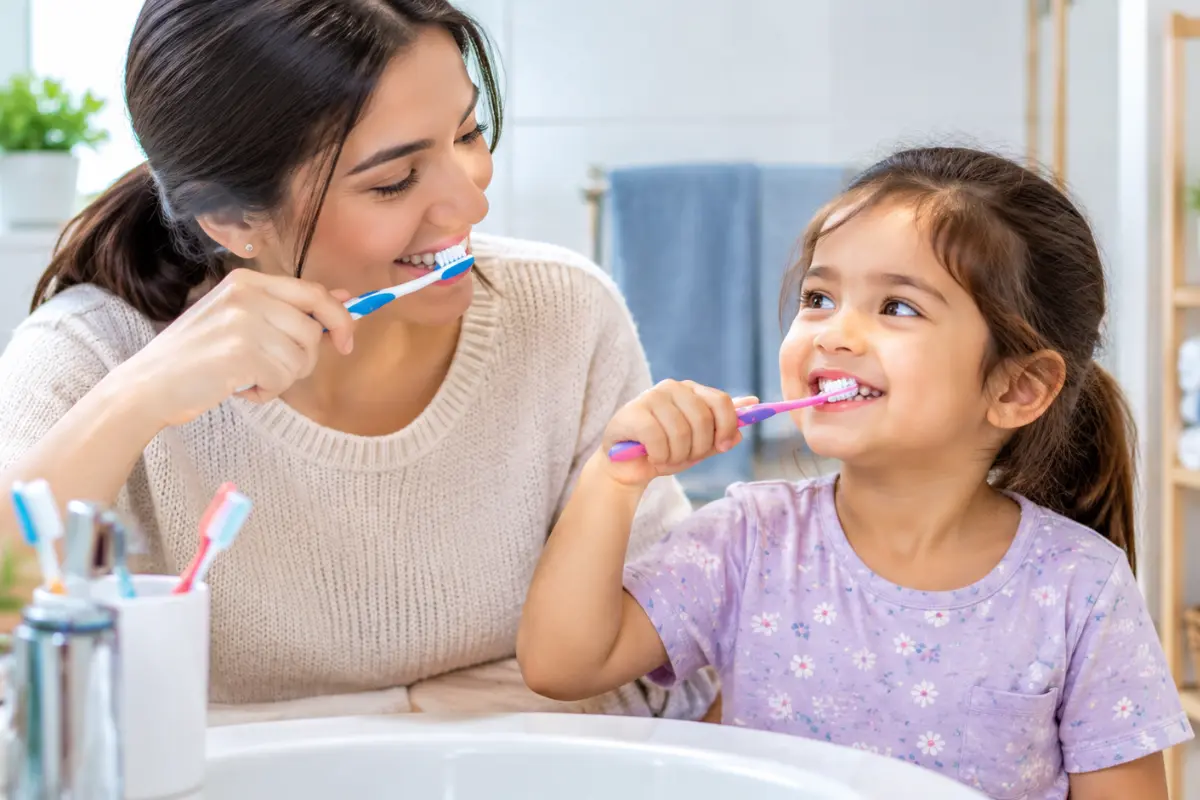
Brushing your child’s teeth properly is one of the most effective ways to protect their oral health and prevent cavities. However, many parents are unsure about the correct brushing technique, the right amount of fluoride toothpaste, or when children should start brushing on their own.
Oral care should begin before your child’s first tooth appears. Once the first tooth erupts, start brushing it with a soft-bristled toothbrush and fluoride toothpaste . Establishing healthy brushing habits early helps prevent tooth decay, supports the development of strong, healthy teeth, and promotes healthy gums as children grow.
In this step-by-step guide, you’ll learn how to brush your child’s teeth properly, choose the right toothbrush and fluoride toothpaste, encourage healthy brushing habits, and keep your child’s smile healthy for years to come.
Why Is Proper Tooth Brushing Important for Kids?
Proper tooth brushing is important for maintaining children’s oral health and supporting their overall growth. Healthy baby teeth help children chew food properly, speak clearly, and hold space for permanent teeth to erupt in the correct position. They also play an important role in the healthy development of a child’s mouth and jaw.
Brushing your child’s teeth twice a day removes plaque, food particles, and harmful bacteria that can lead to cavities, gum disease, and tooth decay. If brushing is not done regularly, plaque builds up on the teeth, allowing bacteria to produce acids that attack tooth enamel and cause various dental problems.
Developing good brushing habits from an early age helps children maintain healthy teeth and gums throughout childhood. Combined with flossing, a balanced diet, and regular dental checkups, proper brushing can significantly reduce the risk of oral health problems and support a lifetime of healthy smiles.
When Should You Start Brushing Your Child’s Teeth?
Parents should begin cleaning their baby’s mouth even before the first tooth appears. After each feeding, gently wipe the baby’s gums with a clean, soft, damp cloth to remove bacteria and keep the mouth clean.
As soon as the first baby tooth erupts, start brushing with a soft-bristled infant toothbrush and a rice-grain-sized amount of fluoride toothpaste, as recommended by the American Dental Association (ADA). Brushing twice a day—once in the morning and once before bedtime—helps remove plaque, prevent tooth decay, and establish healthy oral hygiene habits from an early age.
Although baby teeth are temporary, they play an important role in chewing food, supporting clear speech, and guiding permanent teeth into the correct position. Keeping them healthy helps reduce the risk of cavities and future dental problems.
Parents should also schedule their child’s first dental visit within six months after the first tooth appears or by the child’s first birthday. Early dental checkups allow dentists to monitor oral development, detect potential problems early, and provide personalized guidance on brushing, fluoride use, and preventive dental care.
How to Choose the Right Toothbrush and Toothpaste
Choosing the right toothbrush and toothpaste is an important part of maintaining your child’s oral health. A toothbrush that matches your child’s age and a fluoride toothpaste with the correct fluoride level can help remove plaque effectively and reduce the risk of cavities.
Choose the Right Toothbrush
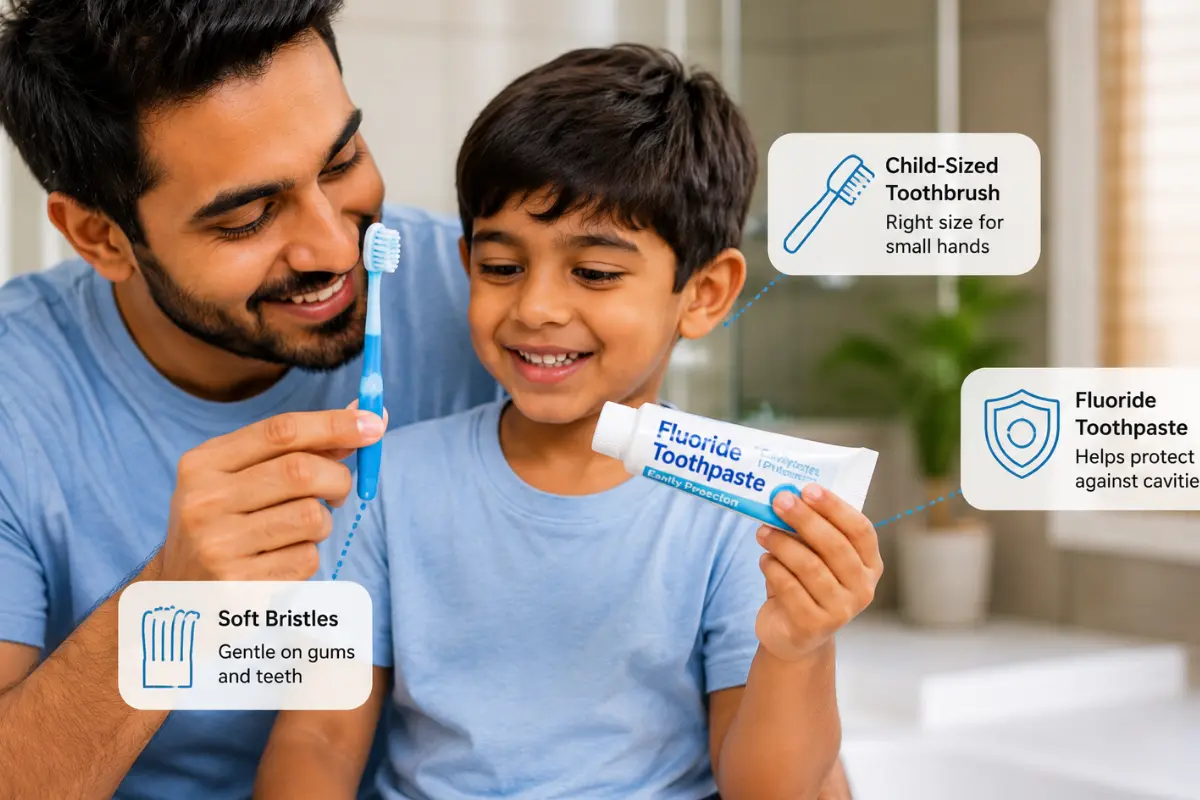
Select a toothbrush with a small head, soft bristles, and a comfortable handle designed for your child’s age. The small brush head makes it easier to reach all areas of the mouth, while soft bristles clean teeth gently without damaging the gums.
For children aged 3 years and older, a child-friendly electric toothbrush can also be a good option if your child enjoys using it. If you use an electric toothbrush, guide it slowly from tooth to tooth rather than scrubbing. Let the toothbrush do the cleaning instead of applying extra pressure or scrubbing back and forth.
Remember to replace your child’s toothbrush or electric toothbrush head every 3–4 months, or sooner if the bristles become worn or frayed.
Choose the Right Fluoride Toothpaste
Fluoride toothpaste helps strengthen tooth enamel and protects children’s teeth from cavities. The amount of toothpaste should be based on your child’s age.
- Under 3 years: Use a rice-grain-sized smear of fluoride toothpaste (at least 1,000 ppm fluoride).
- Ages 3–6 years: Use a pea-sized amount of fluoride toothpaste (at least 1,000 ppm fluoride).
- Age 6 and older: Use a pea-sized amount of standard fluoride toothpaste containing 1,350–1,500 ppm fluoride.
Avoid fluoride-free “training” toothpastes for daily use unless your child’s dentist recommends them. Always encourage your child to spit out the toothpaste after brushing instead of swallowing it.
How to Brush Kids’ Teeth Properly: A Step-by-Step Guide
Brushing your child’s teeth correctly is essential for removing plaque, preventing cavities, and keeping their gums healthy. Following the proper brushing technique every day helps protect both baby teeth and permanent teeth while encouraging lifelong oral hygiene habits.
Step 1: Position the Toothbrush Correctly
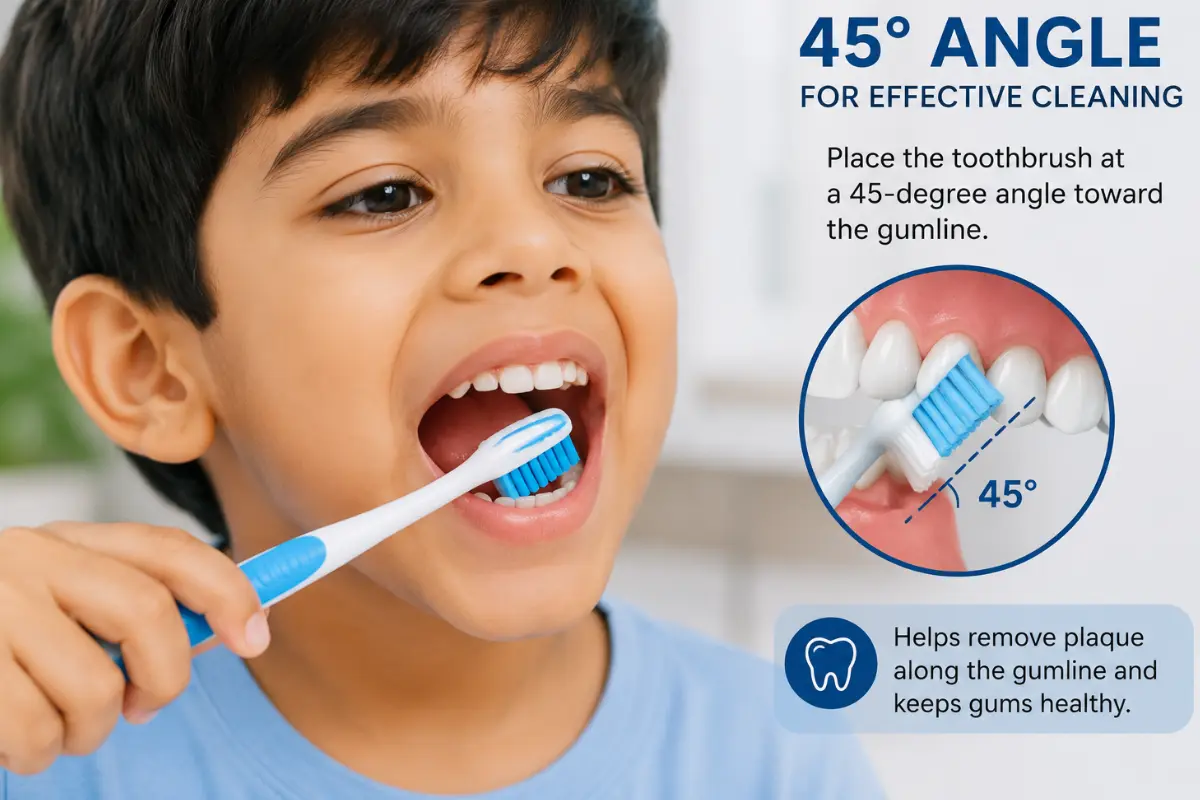
Hold the toothbrush at a 45-degree angle toward the gum line. This position allows the soft bristles to clean both the teeth and the area where plaque commonly builds up. Avoid pressing too hard, as excessive pressure can irritate the gums and wear down tooth enamel.
Step 2: Brush Using Gentle Circular Motions
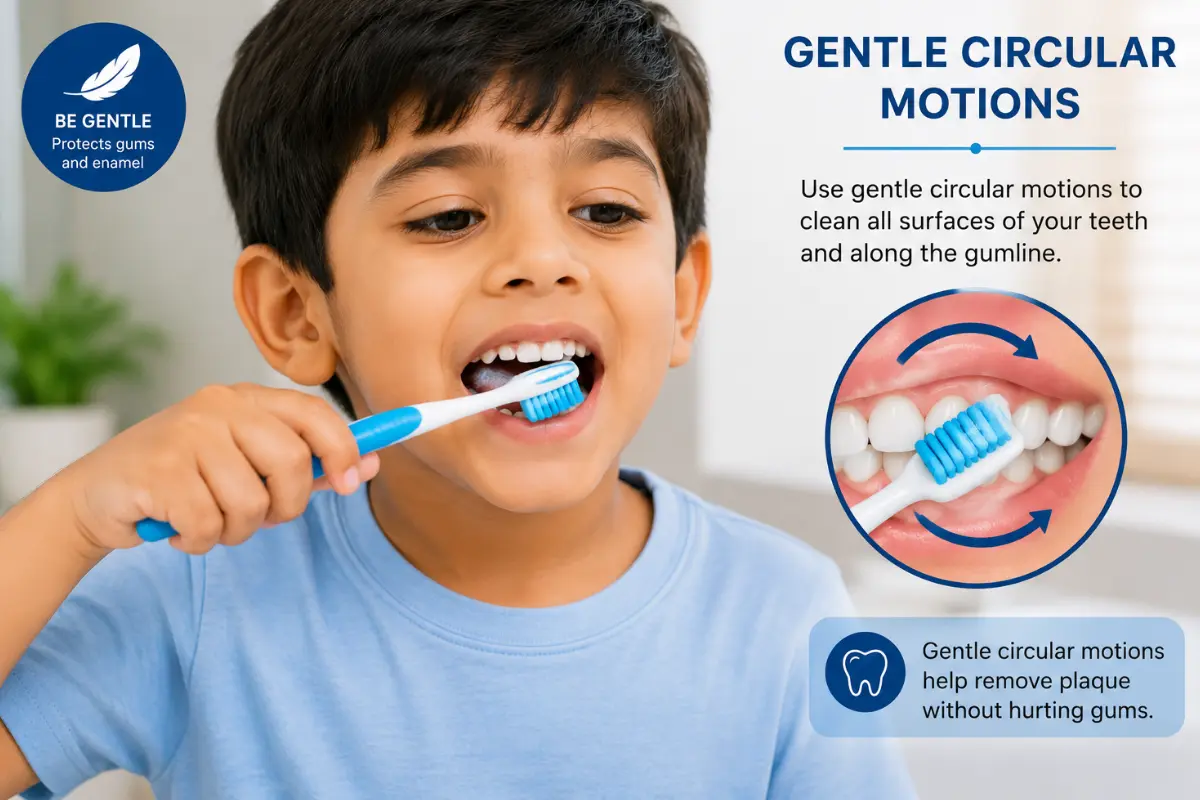
Move the toothbrush in small, gentle circular motions to clean each tooth thoroughly, while avoiding aggressive back-and-forth scrubbing. Gentle brushing helps remove plaque while protecting your child’s teeth and gums from damage.
Step 3: Clean Every Surface of the Teeth
Brush all tooth surfaces carefully, including:
- The outer surfaces
- The inner surfaces
- The chewing surfaces of the back teeth
- Along the gum line
Don’t rush. Make sure every tooth is cleaned thoroughly.
Step 4: Gently Brush the Tongue
Bacteria can also collect on the tongue and contribute to bad breath. Gently brushing your child’s tongue helps remove bacteria and keeps the mouth feeling fresh and clean.
Step 5: Spit Out the Toothpaste—Don’t Rinse
After brushing, encourage your child to spit out the toothpaste without rinsing with water. Leaving a small amount of fluoride on the teeth helps strengthen enamel and provides longer-lasting protection against cavities.
Step 6: Brush for Two Full Minutes
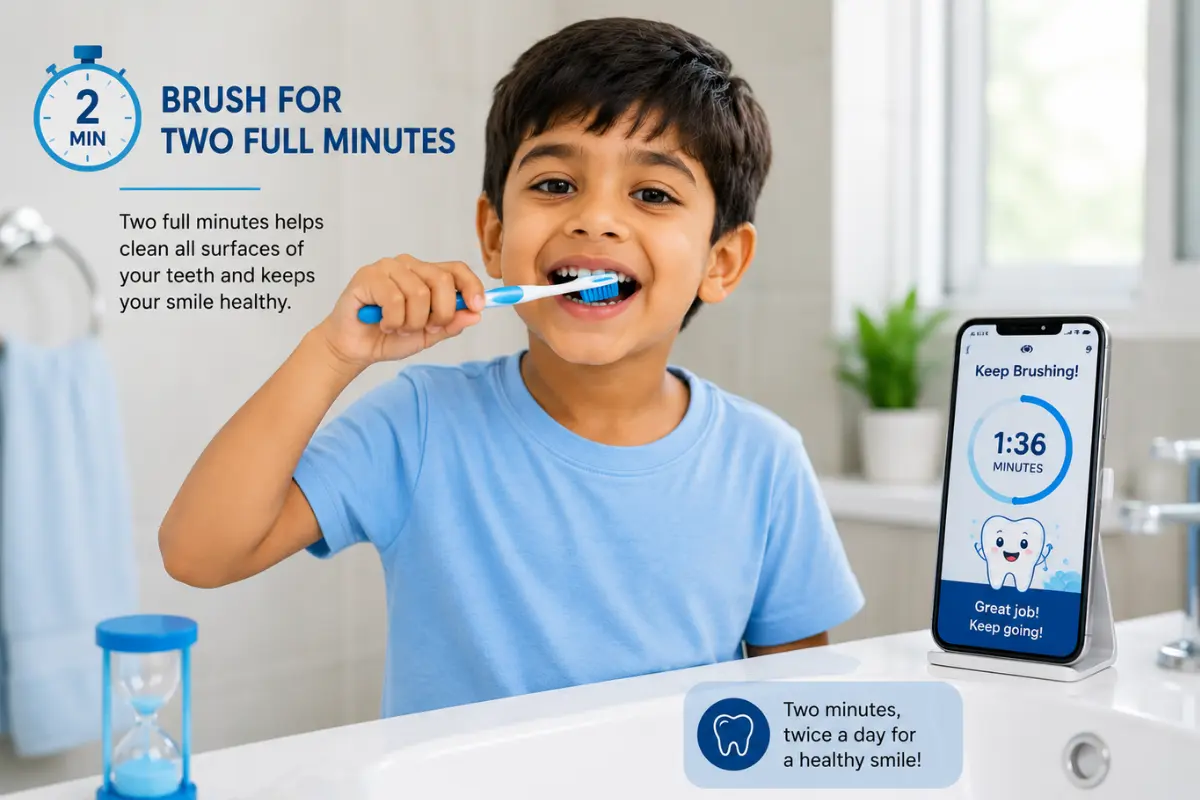
Children should brush their teeth for at least two minutes, twice a day—once in the morning and once before bedtime. Using a timer, a favorite two-minute song, or a brushing app can make brushing more enjoyable while ensuring enough time is spent cleaning every tooth.
Step 7: Parents Should Supervise Brushing
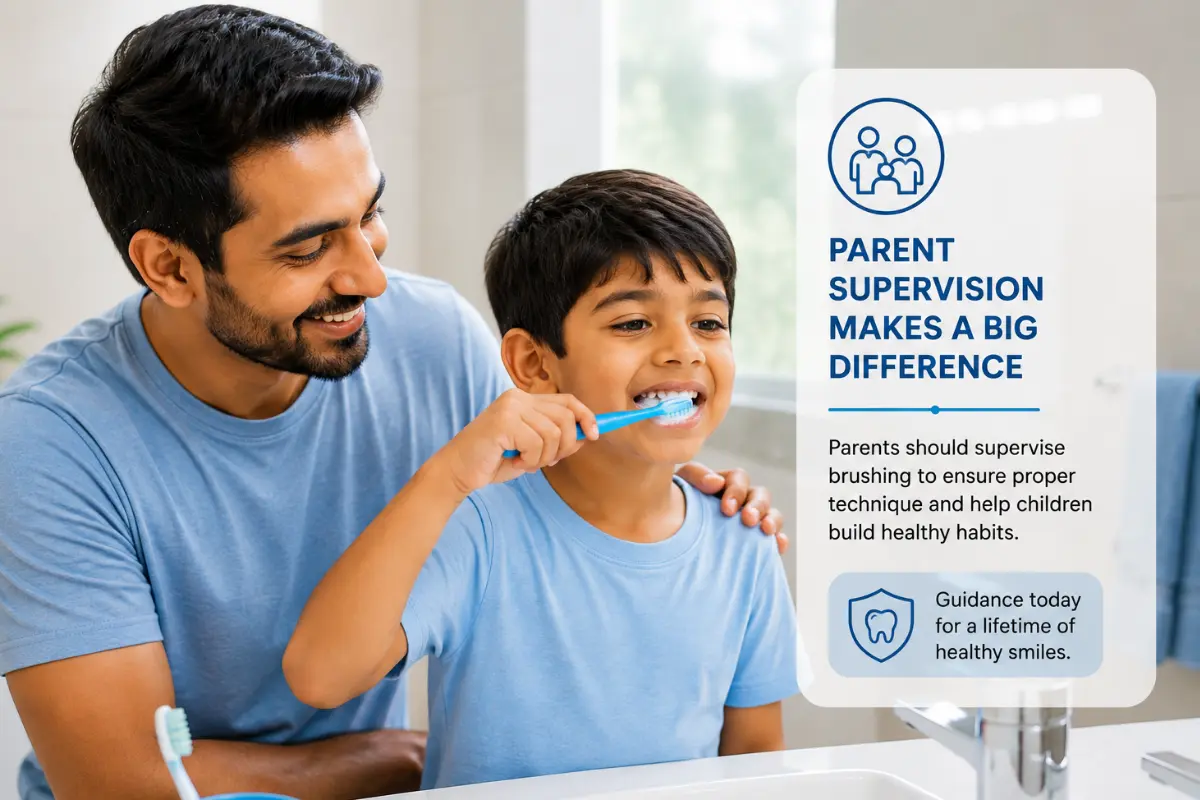
Many children need help or supervision until around age 7–8, although readiness varies from child to child. Parents should supervise or assist with brushing until they are confident their child can clean all tooth surfaces properly.
Teach Your Child Healthy Brushing Habits
Teaching children healthy brushing habits from an early age helps them develop a lifelong oral care routine. While young children may want to brush their teeth independently, they still need guidance and supervision until they have the coordination to clean their teeth effectively.
One of the best ways to encourage good brushing habits is to make brushing part of a consistent daily routine. Children should brush their teeth twice a day—once in the morning and again before bedtime. Brushing at the same time every day helps children develop a lasting habit.
Parents can also make brushing more enjoyable by using simple and fun techniques, such as:
- Let your child choose a colorful toothbrush with their favorite character.
- Use a two-minute timer, song, or brushing app.
- Brush together as a family to set a positive example.
- Praise your child after brushing instead of criticizing mistakes.
- Use a reward chart or stickers to encourage consistency.
As children become older, encourage them to brush on their own first, then check and finish brushing if necessary. This helps build confidence while ensuring their teeth are cleaned properly.
Remember that patience and consistency are essential. Positive reinforcement works much better than forcing or scolding children, helping them develop healthy oral hygiene habits that can last a lifetime.
Encourage Your Child to Floss Every Day
Brushing alone cannot remove all the plaque and food particles trapped between the teeth. As soon as two teeth begin to touch, children should start flossing daily to clean areas that a toothbrush cannot reach.
Daily flossing helps remove plaque, prevent cavities between the teeth, reduce the risk of gum disease, and maintain healthy gums. It also helps keep your child’s breath fresh by removing food debris that can cause bad breath.
Young children usually need help with flossing until they develop the coordination to do it correctly on their own. Parents can use traditional dental floss, child-friendly floss picks, or interdental cleaners recommended by their dentist to make flossing easier and more comfortable.
To encourage consistency, make flossing part of your child’s bedtime oral care routine.You can floss before or after brushing. Choose the routine that works best for your child and helps them clean between their teeth consistently. With regular practice and parental support, flossing becomes a simple daily habit that contributes to strong teeth, healthy gums, and better long-term oral health.
Limiting sugary foods and drinks is one of the most effective ways to protect your child’s teeth from cavities. When children consume sugary snacks, candies, cookies, soft drinks, or fruit juices, the bacteria in their mouths feed on the sugar and produce acids that gradually weaken tooth enamel. Over time, this can lead to tooth decay and cavities.
Instead of eliminating treats, focus on reducing how often your child consumes sugary foods. Offer sweets during mealtimes rather than as frequent snacks, as saliva production increases during meals and helps wash away food particles and neutralize harmful acids.
Encourage healthier alternatives such as fresh fruits, vegetables, cheese, yogurt, nuts (for children who can safely eat them), and plain water. These foods provide essential nutrients that support healthy teeth and gums without increasing the risk of tooth decay.
If your child eats sugary foods or drinks, encourage them to rinse their mouth with water afterward. After acidic foods or drinks, wait before brushing rather than brushing immediately, as brushing right away may contribute to further wear of softened tooth enamel.
Making healthy food choices every day, along with regular brushing and flossing, helps keep your child’s teeth strong and significantly reduces the risk of cavities.
Provide a Tooth-Friendly Diet
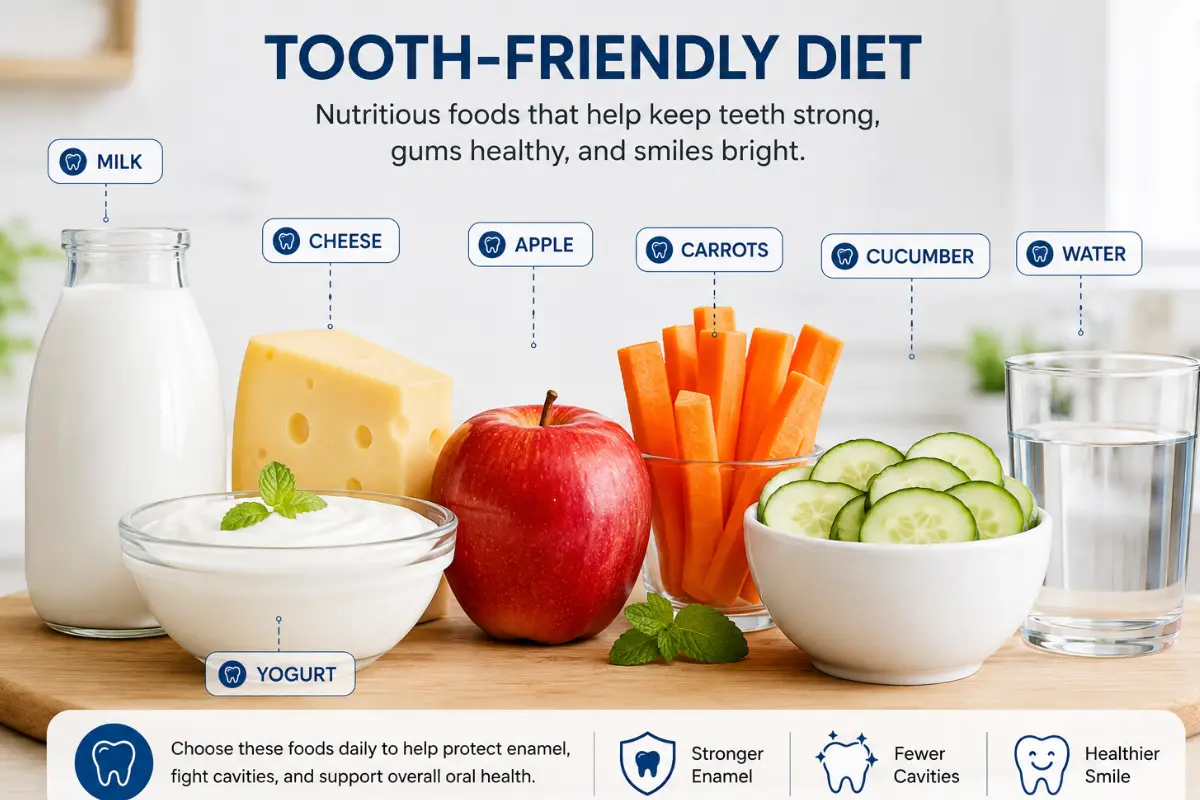
A healthy, balanced diet plays an essential role in keeping your child’s teeth and gums strong. While brushing and flossing remove plaque, the foods children eat every day provide the nutrients needed to build and maintain healthy teeth.
Calcium-rich foods
Calcium-rich foods, such as milk, yogurt, and cheese, help strengthen tooth enamel and support healthy jaw development. Vitamin D is equally important because it helps the body absorb calcium more effectively, promoting stronger teeth and bones.
Fresh fruits and vegetables
Fresh fruits and vegetables, especially crunchy options like apples, carrots, and cucumbers, naturally stimulate saliva production. Saliva helps wash away food particles, neutralize harmful acids, and reduce the risk of cavities. Leafy green vegetables also provide important vitamins and minerals that support healthy gums.
Water
Water is the best drink for children’s oral health. It helps rinse away food debris, keeps the mouth hydrated, and, in many areas, provides fluoride that helps protect teeth against decay. Encourage your child to drink water instead of sugary drinks such as soda, sports drinks, or sweetened fruit juices.
A balanced diet that includes whole grains, lean proteins, dairy products, fruits, vegetables, and plenty of water helps support healthy teeth, strong gums, and overall oral health.
Quick Tips for a Tooth-Friendly Diet
- Choose milk, yogurt, and cheese for healthy snacks.
- Serve fresh fruits and vegetables instead of sugary treats.
- Encourage your child to drink water throughout the day.
- Limit sticky snacks like gummies, caramel, and dried fruit.
- Include foods rich in calcium and vitamin D every day.
Schedule Regular Dental Checkups
Regular dental checkups are an important part of maintaining your child’s oral health. Even with good brushing and flossing habits at home, routine dental visits help identify problems that may not be visible to parents.
The American Academy of Pediatric Dentistry (AAPD) recommends scheduling your child’s first dental visit within six months after the first tooth appears or by their first birthday. Early visits allow the dentist to monitor oral development, detect cavities or other dental issues early, and provide personalized advice on brushing, fluoride use, nutrition, and healthy oral habits.
After the first visit, most children should have a dental checkup every six months, although the dentist may recommend more frequent visits based on your child’s oral health needs.
During a routine dental visit, the dentist may:
- Examine your child’s teeth and gums.
- Check for cavities and early signs of tooth decay.
- Monitor the growth and development of the baby and permanent teeth.
- Recommend fluoride treatments or dental sealants if needed.
- Guide proper brushing, flossing, and healthy eating habits.
Regular dental checkups help prevent small dental problems from becoming more serious and expensive to treat. Combined with good oral hygiene at home, they play a key role in keeping your child’s smile healthy for years to come.
Parent Tip
Don’t wait until your child has a toothache to visit the dentist. Preventive dental care is easier, less stressful, and often less costly than treating dental problems after they develop.
Change Your Child’s Toothbrush Regularly
Using a clean toothbrush is essential for maintaining good oral hygiene. Over time, toothbrush bristles become worn and lose their ability to remove plaque and food particles effectively. A worn-out toothbrush may also irritate the gums and make brushing less effective.
Parents should replace their child’s toothbrush or electric toothbrush head every 3–4 months, or sooner if the bristles become frayed or damaged. Children who brush with too much pressure may need a replacement more frequently because the bristles wear out faster.
Although the risk of reinfection is low, using a fresh toothbrush helps maintain better oral hygiene and prevents bacteria from lingering on old bristles.
When choosing a replacement toothbrush, select one with soft bristles, a small brush head, and an age-appropriate design. A comfortable toothbrush makes brushing easier and encourages children to maintain healthy oral care habits.
Replacing a toothbrush regularly is a simple habit that helps improve brushing effectiveness and supports healthy teeth and gums.
Quick Tip
Check your child’s toothbrush once a month. If the bristles are bent, flattened, or frayed, it’s time to replace them—even if it has been less than three months.
Protect Your Child’s Teeth During Sports
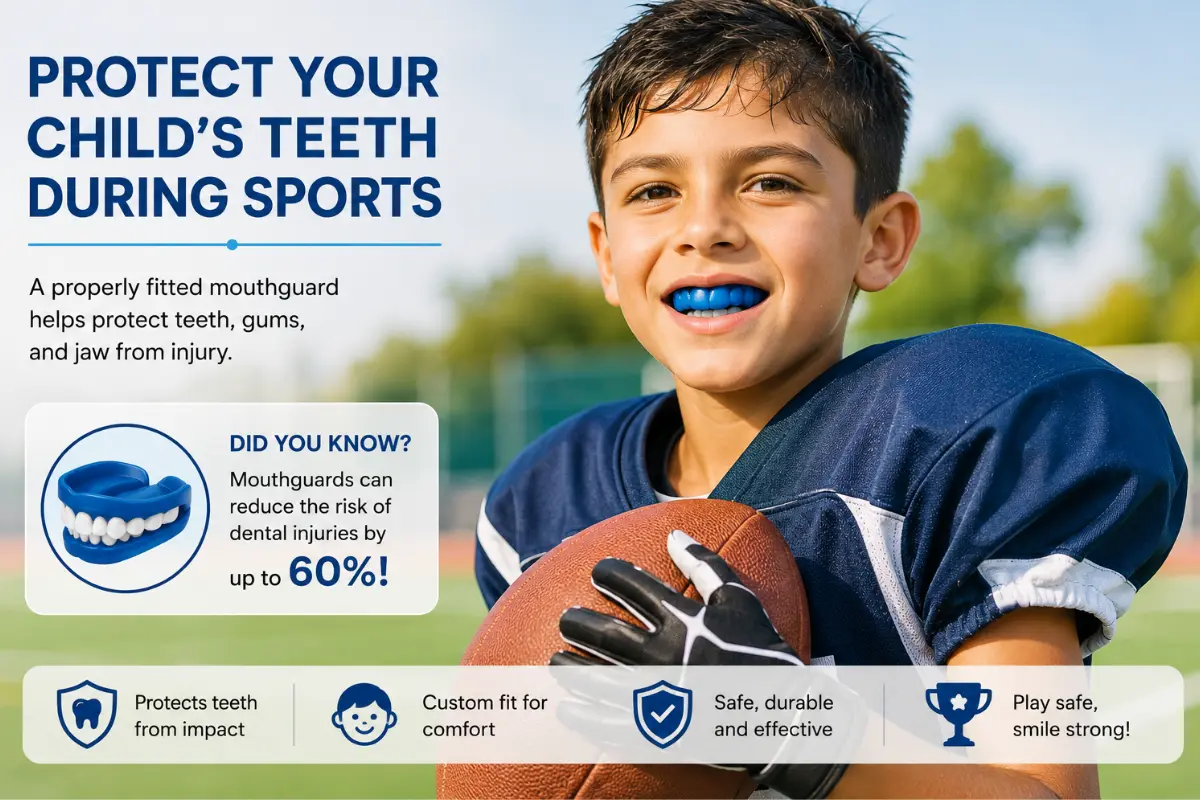
Children who participate in sports and other physical activities are at a higher risk of dental injuries, including chipped, broken, or knocked-out teeth. Wearing the right protective gear can significantly reduce the risk of these injuries and help keep your child’s smile safe.
One of the best ways to protect your child’s teeth is by using a well-fitted mouthguard during contact and high-impact sports such as football, hockey, basketball, rugby, martial arts, skateboarding, and cycling. A properly fitted mouthguard cushions the teeth and jaw, reducing the impact of accidental falls or collisions.
There are different types of mouthguards available, including stock mouthguards, boil-and-bite mouthguards, and custom-made mouthguards. While all provide some level of protection, a custom-made mouthguard fitted by a dentist offers the best comfort, fit, and protection.
Parents should also ensure that children wear other recommended protective equipment, such as helmets and face guards, when appropriate. Combining the right safety equipment with regular dental checkups helps reduce the risk of serious dental injuries.
Preventing dental injuries is always easier and less expensive than treating them. Taking simple precautions before sports activities can help protect your child’s teeth for years to come.
If your child experiences a dental injury during sports, contact your dentist immediately. Quick treatment can often save a damaged or knocked-out tooth.
Make Oral Hygiene Fun
Children are more likely to brush and floss regularly when oral care feels fun instead of a daily chore. Creating a positive and enjoyable brushing routine helps children develop healthy habits that can last a lifetime.
One of the easiest ways to encourage brushing is to let your child choose a colorful toothbrush or one featuring their favorite cartoon character. Pair it with a child-friendly fluoride toothpaste that has a mild flavor to make brushing a more pleasant experience.
You can also make brushing interactive by using a two-minute timer, playing a favorite song, or using a toothbrushing app that guides children through the recommended brushing time. These simple activities keep children engaged while ensuring they brush for the full two minutes.
Positive reinforcement is another effective way to build good habits. Praise your child after brushing or use a reward chart with stickers to celebrate consistent brushing and flossing. Small rewards and encouragement often motivate children more than criticism.
Brushing together as a family is another great way to set a positive example. Children naturally imitate their parents, and seeing family members brush and floss every day encourages them to do the same.
Remember, patience and consistency are key. Turning oral hygiene into a fun daily routine helps children develop confidence, independence, and lifelong healthy dental habits.
Fun Ideas to Motivate Kids
- Let your child choose their own toothbrush.
- Play a favorite two-minute brushing song.
- Use a brushing timer or mobile app.
- Create a weekly reward chart with stickers.
- Brush together as a family every morning and night.
Be a Good Role Model for Healthy Dental Habits
Children learn by watching the people around them, especially their parents. When they see you brushing and flossing every day, they are more likely to develop the same healthy habits. Setting a positive example is one of the most effective ways to encourage lifelong oral hygiene.
Make brushing and flossing a family activity by brushing together every morning and before bedtime. This not only teaches the correct routine but also makes oral care feel like a normal part of everyday life rather than a chore.
Show your child that taking care of their teeth is important by scheduling regular dental checkups, choosing healthy snacks, and limiting sugary foods and drinks. Children are more likely to follow these habits when they see their parents doing the same.
Remember to encourage your child with praise and patience. Celebrate small achievements, such as brushing for the full two minutes or remembering to floss without being reminded. Positive reinforcement helps build confidence and motivates children to continue practicing good oral hygiene.
By becoming a positive role model, you can help your child develop healthy dental habits that support strong teeth, healthy gums, and a confident smile for years to come.
Parent Tip
Children imitate actions more than words. If you want your child to brush and floss every day, let them see you doing it consistently.
Conclusion
Brushing your child’s teeth properly is one of the most important steps you can take to protect their oral health. Starting early, using the right brushing technique, choosing an age-appropriate toothbrush and fluoride toothpaste, flossing daily, limiting sugary foods, and scheduling regular dental checkups all contribute to strong teeth and healthy gums.
Developing healthy oral hygiene habits during childhood not only helps prevent cavities and gum disease but also lays the foundation for a lifetime of healthy smiles. With patience, consistency, and positive encouragement, parents can help their children build good dental habits that last well into adulthood.
By following these simple step-by-step tips, you can keep your child’s teeth clean, healthy, and protected while giving them the confidence to smile every day.
Kid's Teeth Brushing FAQ
- 1. What is the correct way to brush a child's teeth?
Hold the toothbrush at a 45-degree angle toward the gum line and use gentle circular motions to clean the front, back, and chewing surfaces of every tooth. Brush for two minutes twice a day, then encourage your child to spit out the toothpaste without rinsing with water.
- 2. At what age should children brush their teeth by themselves?
Most children can begin brushing on their own around 7–8 years of age, but parents should continue supervising until they are confident their child can clean every tooth properly.
- 3. How much fluoride toothpaste should children use?
- Under 3 years: A rice-grain-sized smear of fluoride toothpaste.
- 3–6 years: A pea-sized amount of fluoride toothpaste.
- Age 6 and older: A pea-sized amount of standard fluoride toothpaste, unless a dentist recommends otherwise.
- 4. Should children rinse their mouths after brushing?
No. Children should spit out the toothpaste but avoid rinsing with water. Leaving a small amount of fluoride on the teeth helps strengthen enamel and provides better protection against cavities.
- 5. How can I make my child enjoy brushing their teeth?
Make brushing fun by using a colorful toothbrush, playing a two-minute brushing song, using a reward chart, or brushing together as a family. Positive reinforcement and a consistent routine can help children develop healthy oral hygiene habits.