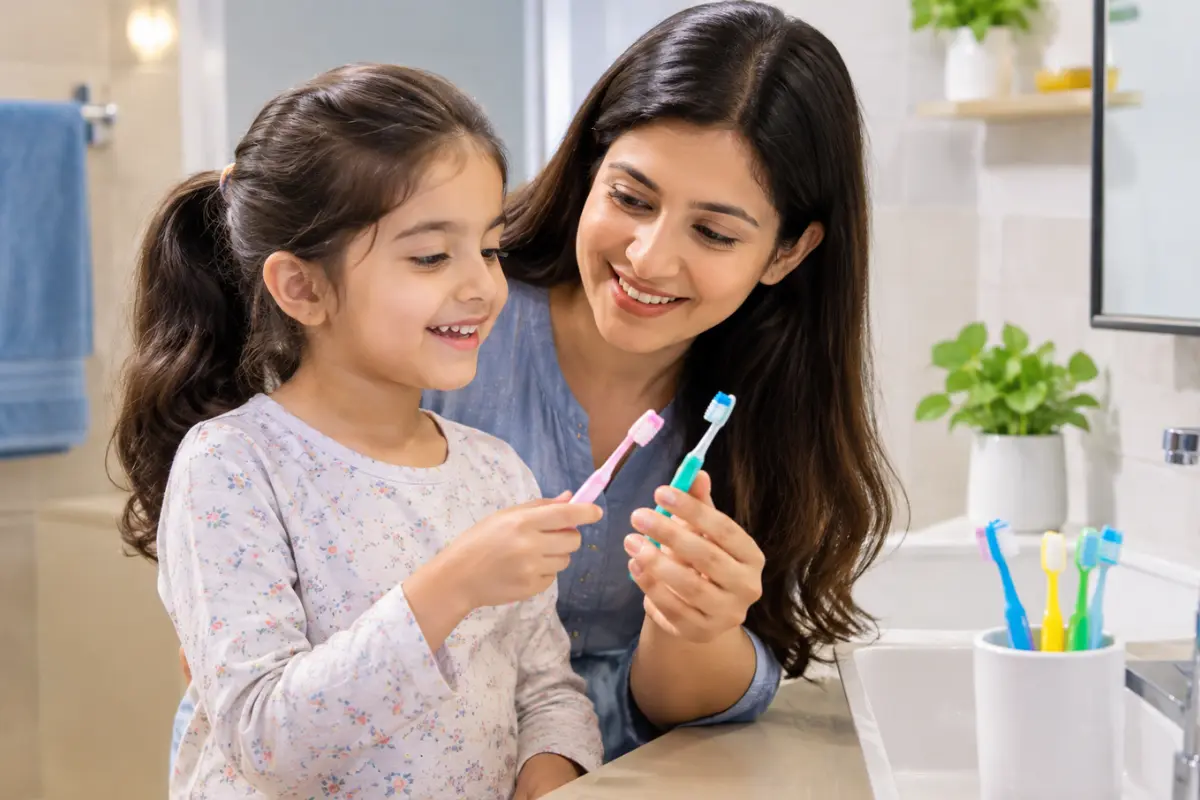
Choosing the right toothbrush may seem like a small decision, but it plays an important role in helping your child develop healthy oral hygiene habits. Many parents, however, are unsure about which toothbrush is best for their child.
The market offers a wide variety of children’s toothbrushes, including electric models, colorful cartoon designs, built-in lights, and different head sizes. With so many options available, choosing the right one can be challenging because not every toothbrush is suitable for every child’s mouth.
The best toothbrush should be age-appropriate, have soft bristles, a small head, and a comfortable handle. These features can make brushing more comfortable and effective for your child.
In this guide, you’ll learn what things are important when choosing the right toothbrush for your child, including the right bristle type, brush head size, handle design, and age-appropriate features. We’ll also compare manual and electric toothbrushes, explain when to replace a child’s toothbrush, and highlight common buying mistakes parents should avoid.
By choosing a toothbrush that fits your child’s age, needs, and comfort, you can make daily brushing easier and help support good oral care as they grow.
What Makes a Good Toothbrush for Kids?
It is important to choose the right toothbrush for daily brushing because it can make brushing easier and more comfortable. The right toothbrush should be age-appropriate, have soft bristles, a small head, and a comfortable handle that is easy for your child to grip and hold.
Oral care begins from infancy, and the way you clean your child’s mouth changes as they grow. Before the first tooth appears, parents can gently clean the gums with a soft, damp cloth or gauze. Once teeth begin to erupt, it is important to choose an age-appropriate toothbrush with a small head that fits comfortably in your child’s mouth.
Choosing the wrong toothbrush can make brushing uncomfortable and less effective. A toothbrush with hard bristles or a large head may be difficult for a child to use comfortably. Parents should therefore consider their child’s age, mouth size, brushing ability, and comfort when choosing a toothbrush.
Key Features to Look for in a Children’s Toothbrush
Soft Bristles
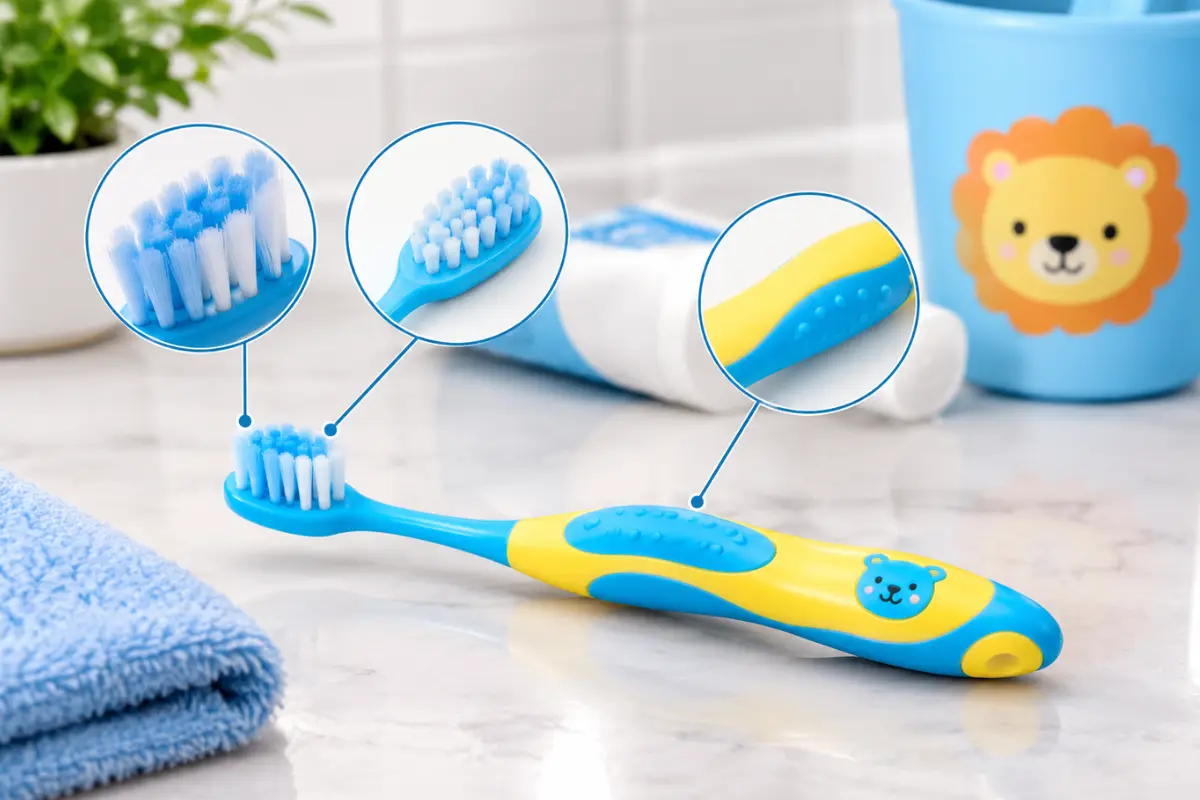
Soft bristles play an important role when choosing a toothbrush for children of all ages. The American Dental Association (ADA) recommends soft-bristled toothbrushes because they can effectively remove plaque while gently cleaning the teeth and gums.
A soft-bristled toothbrush can:
- Clean teeth and gums gently
- Minimize the risk of gum irritation
- Feel more comfortable during brushing
- Be suitable for developing teeth and gums
Small Brush Head
A small-headed toothbrush is more comfortable and easier for children to use. The American Dental Association (ADA) recommends a toothbrush with a compact head that can fit comfortably inside your child’s mouth and make it easier to reach different tooth surfaces, including the back teeth.
A large brush head may be difficult to maneuver, especially in smaller mouths.
A small brush head can:
- Reach difficult-to-clean areas more easily
- Provide a more comfortable brushing experience
- Make brushing easier for children
Comfortable Handle
Toothbrush handles come in different shapes and sizes, so choosing one that is easy for your child to hold can make brushing more comfortable. A well-designed handle gives children better control and can make daily brushing easier.
A comfortable toothbrush handle should have:
- A thick, easy-to-hold grip
- A comfortable shape
- A lightweight design
- A size suitable for the child’s age
As children grow, their toothbrush handle size may also change. Parents who help younger children brush may prefer a handle that provides better control during brushing.
Safe and Durable Materials
Choose a children’s toothbrush made from durable materials and designed with smooth, rounded edges. A durable design can help the toothbrush remain suitable for regular use.
A children’s toothbrush should ideally have:
- Smooth, rounded edges
- A durable design suitable for regular use
- Bristles that remain securely attached during normal brushing
If choosing a powered toothbrush, make sure it is specifically designed for children and follow the manufacturer’s age and usage instructions.
Manual vs. Electric Toothbrushes for Kids
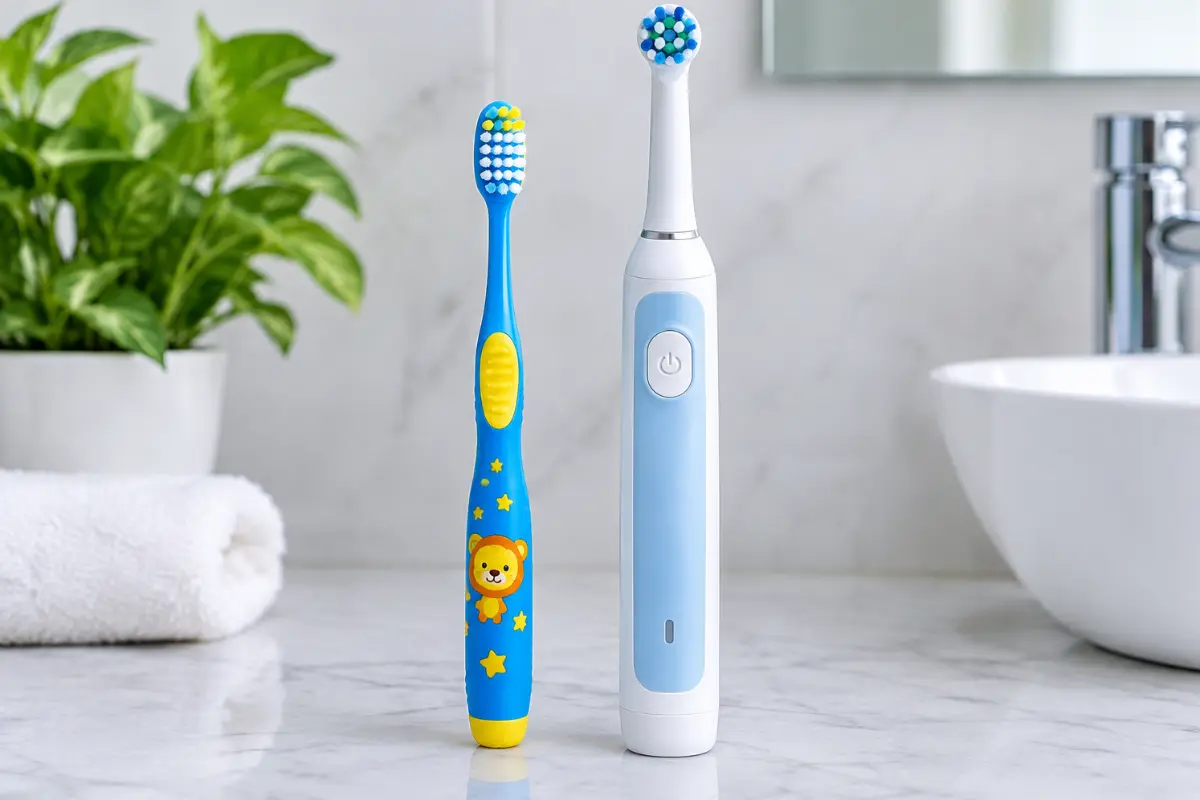
Electric and manual toothbrushes can both be good options for children when used properly. The best choice depends on your child’s age, brushing ability, comfort, and personal preference.
Manual toothbrushes are simple and affordable, while electric toothbrushes provide powered brushing and may include helpful features such as built-in timers. Understanding the differences between manual and electric toothbrushes can help parents choose a toothbrush that suits their child’s individual needs.
Manual Toothbrush for Kids
Many children are comfortable using a manual toothbrush, making it a good choice for toddlers and preschoolers. Manual toothbrushes are simple and easy to use, affordable, and do not require batteries or charging.
When used with the correct technique and proper supervision, a manual toothbrush can effectively clean your child’s teeth and support good oral health.
Electric Toothbrush for Kids
Electric toothbrushes are popular among many parents. According to research published on PubMed, powered toothbrushes can help remove plaque effectively.
They may also have useful features such as a built-in timer and consistent brushing movement. These features can make brushing easier and more engaging for some children.
Some children may also be more interested in using an electric toothbrush, which can make it easier to encourage a regular brushing routine.
Manual vs. Electric Toothbrush Comparison
| Features | Manual Toothbrush | Electric Toothbrush |
|---|---|---|
| Ease of use | Simple | May be easier for some children |
| Power source | None | Battery or charging required |
| Cost | Usually lower | Usually higher |
| Timer | Usually not included | Often available |
| Brushing movement | Controlled by child or parent | Powered movement |
| Travel | Easy | May require charging or batteries |
| Best for | Children comfortable with manual brushing | Children who may benefit from powered movement |
Which Should You Choose?
Both manual and electric toothbrushes can be a good choice for children. The best option depends on your child’s age, comfort, brushing ability, and preference.
A manual toothbrush can be a simple and affordable choice for children who are comfortable using it. An electric toothbrush may be helpful for children who find brushing difficult or enjoy using a powered toothbrush.
Some electric toothbrushes also have features such as timers that can make brushing easier and more engaging. The most important thing is to choose an age-appropriate toothbrush that your child can use comfortably and maintain a regular brushing routine.
Best Toothbrush for Kids by Age
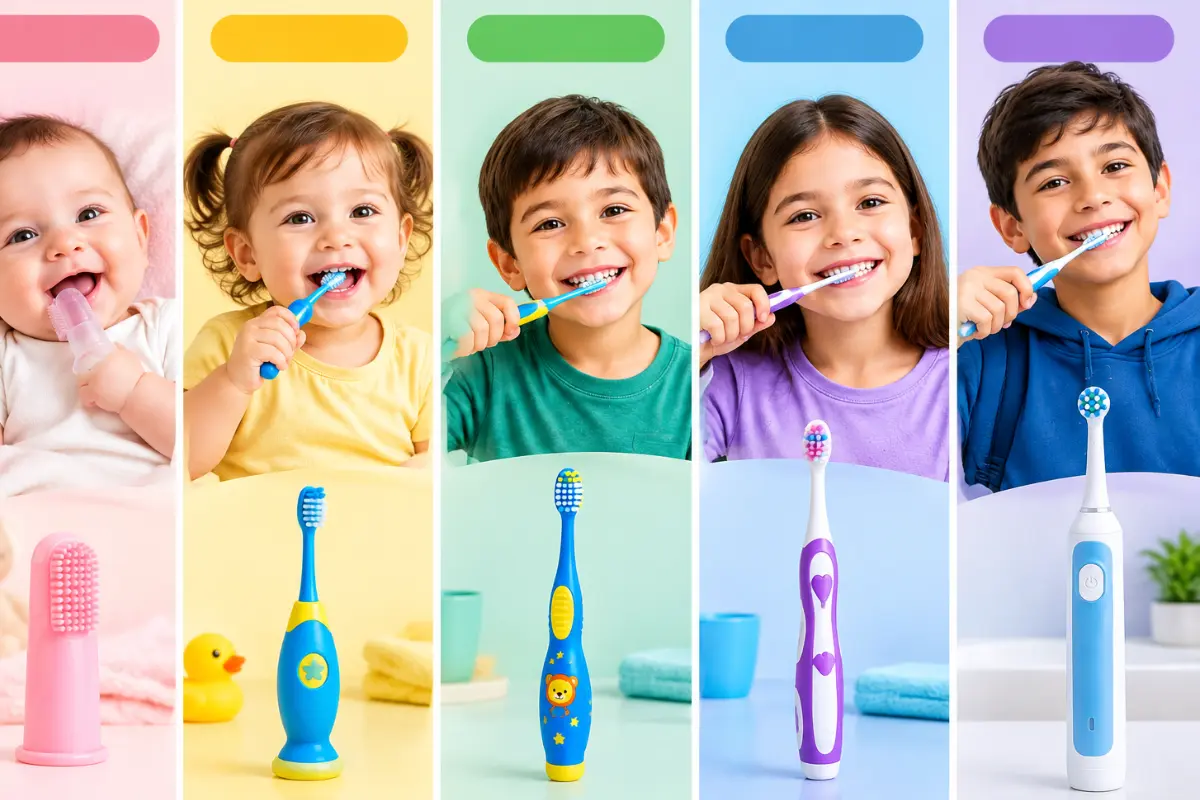
Toothbrush needs can change as children grow. Babies need a soft-bristle toothbrush with a small head that is easy to use. Younger children need smaller, age-appropriate toothbrushes, while older children may be ready for a slightly larger toothbrush as their mouth and brushing ability develop.
0–12 Months
Before the first tooth erupts, parents can gently clean their baby’s gums with a soft, damp gauze cloth. Once the first baby tooth appears, brushing should begin with a soft-bristled toothbrush.
Choose a toothbrush with a small head that fits comfortably in the baby’s mouth.
1–2 Years
Children aged 1–2 years need a small-head toothbrush with soft bristles and an easy-to-grip handle.
At this stage, parents should do more of the brushing while allowing children to practice holding and using the toothbrush.
3–5 Years
Children aged 3–5 years need a toothbrush with soft bristles, an age-appropriate design, a small head, and a comfortable, easy-to-grip handle.
Parents should still supervise and help their child brush while allowing them to participate and develop their brushing skills.
6–8 Years
Children aged 6–8 years need a toothbrush that is slightly larger, age-appropriate, has soft bristles, and has a comfortable handle.
At this stage, parents should encourage their children to develop independent brushing skills while continuing to supervise them.
9+ Years
Children aged 9 and older can usually manage more advanced toothbrushes. Suitable options include larger, age-appropriate brush heads with soft bristles.
Choosing between a manual or electric toothbrush can be suitable depending on the child’s preference and brushing ability. Parents should continue supervision when needed and encourage their child to develop healthy oral hygiene habits.
How to Choose the Right Toothbrush for Your Child
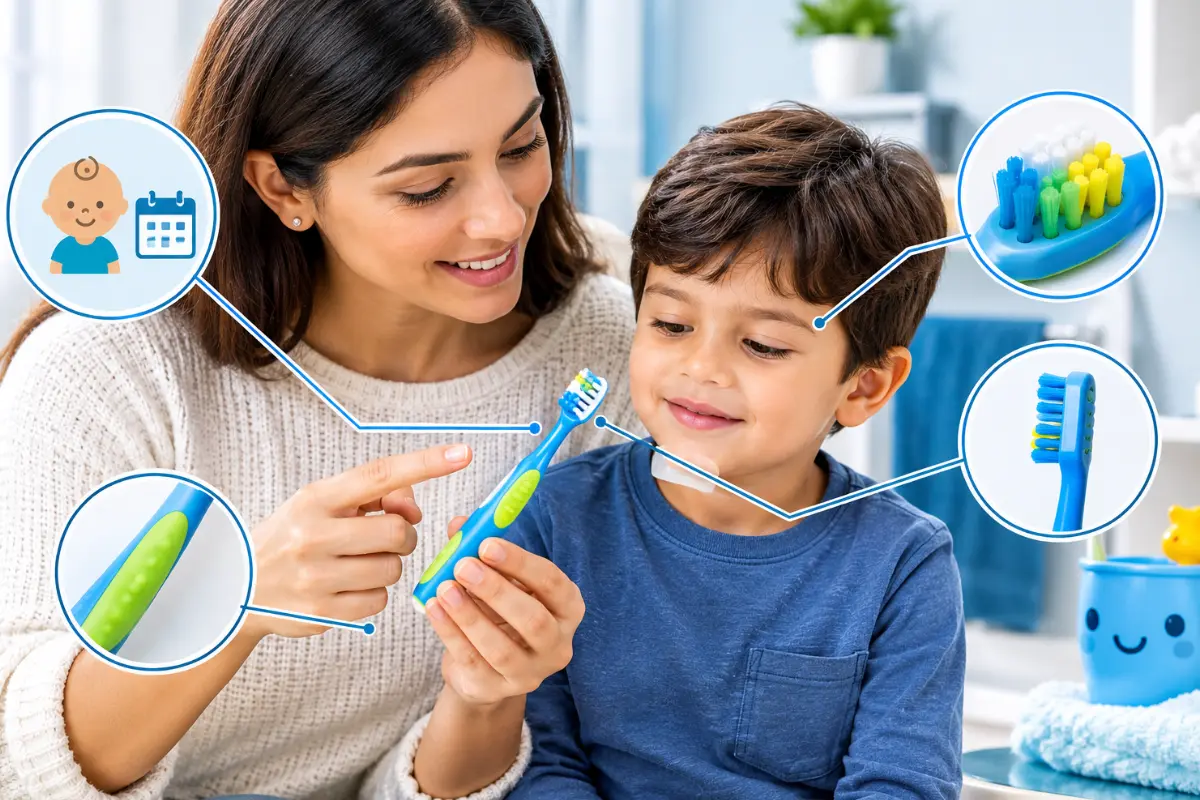
Choosing the right toothbrush for your child depends on more than its color or design. Parents should consider their child’s age, brushing ability, comfort, and the size and features of the toothbrush.
Here are some important things parents should consider when choosing a toothbrush for their child:
1. Check Your Child’s Age
Choose a toothbrush that is designed for your child’s age. Younger children need a smaller toothbrush head and a handle that is easy to hold, while older children may need a slightly larger, age-appropriate toothbrush as their mouth and brushing ability develop.
2. Choose Soft Bristles
Always look for a toothbrush with soft bristles. Soft bristles can effectively clean the teeth while being gentle on the teeth and gums.
Parents should also encourage children to brush gently rather than using too much pressure.
3. Look for a Small, Comfortable Brush Head
A small brush head is important for children because it can fit more comfortably inside their smaller mouths. It can also make it easier to reach different tooth surfaces, including the back teeth.
4. Choose an Easy-to-Grip Handle
The handle should be comfortable and easy for your child to hold. A suitable handle can give children better control while brushing and make it easier for parents to help younger children when needed.
5. Consider Manual vs. Electric
Both manual and electric toothbrushes can be suitable for children. A manual toothbrush is simple and easy to use, while an electric toothbrush may be helpful for some children who have difficulty with brushing movements or need extra motivation.
The most important factor is choosing a toothbrush the child can use correctly and consistently.
6. Check for Safe and Durable Construction
Choose a toothbrush that is designed for regular use and has smooth, safe components. Parents can also look for a durable handle and bristles that remain securely attached during normal brushing.
If choosing a powered toothbrush, make sure it is specifically designed for children and follow the manufacturer’s age and usage instructions.
7. Choose a Toothbrush Your Child Is Comfortable Using
Comfort is also important when choosing a toothbrush. If your child finds the toothbrush uncomfortable or difficult to use, they may be less willing to brush regularly.
Letting your child choose between a few suitable options, such as different colors or designs, can make brushing more enjoyable while you make sure the toothbrush has the features they need.
When Should You Replace Your Child’s Toothbrush?
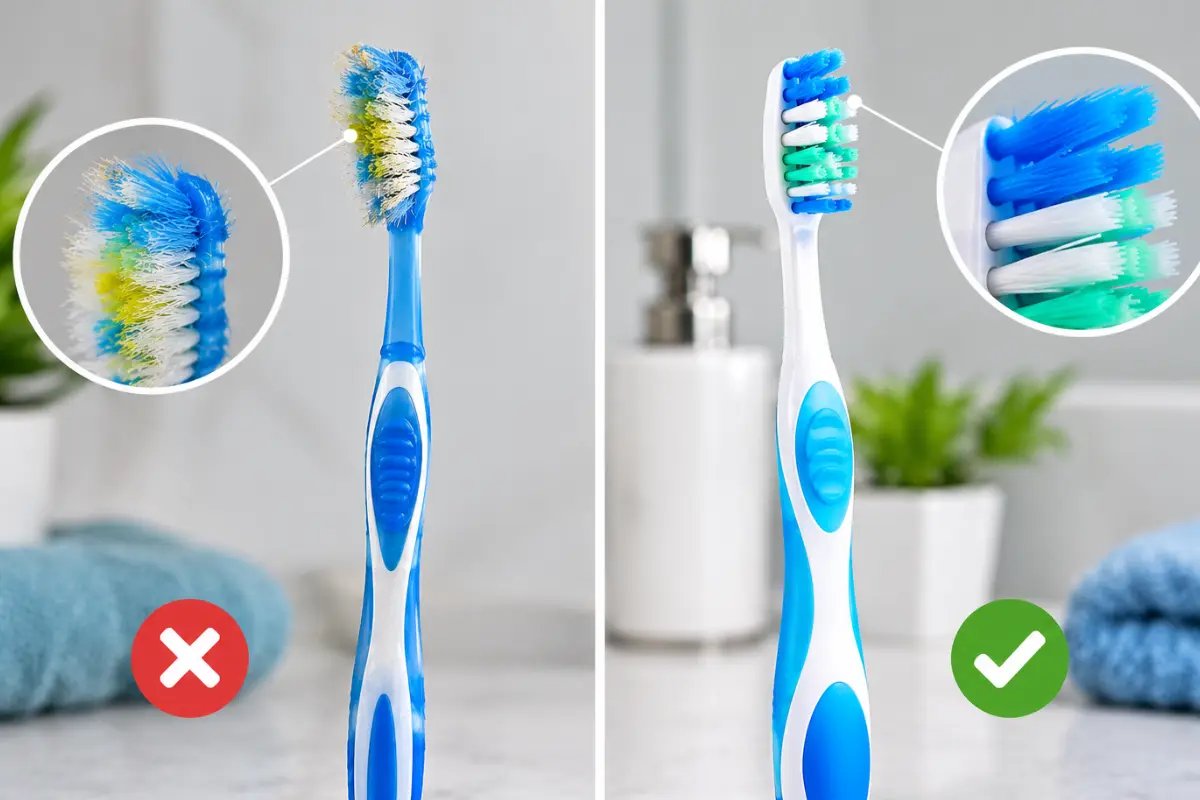
A child’s toothbrush should generally be replaced every 3–4 months or sooner if the bristles become frayed, worn, or damaged.
Some children may wear out their toothbrushes sooner because of brushing habits or using too much pressure. Parents should check the toothbrush regularly and replace it when the bristles no longer look or feel suitable for brushing.
Regularly replacing the toothbrush helps maintain effective cleaning and keeps the brush in good condition.
Common Toothbrush-Buying Mistakes Parents Should Avoid
Choosing the right toothbrush is important, but parents can also make some common mistakes when selecting one for their child. Some mistakes may affect brushing comfort and effectiveness.
Understanding these common mistakes can help parents choose a toothbrush that is safe, comfortable, and suitable for their child’s age and brushing ability.
Choosing Hard Bristles
Some parents may think that hard bristles can clean children’s teeth better, but they are not the best choice for children.
A soft-bristled toothbrush can clean the teeth effectively while being gentler on the teeth and gums. Brushing with too much pressure can also increase the risk of gum irritation and unnecessary wear.
Therefore, parents should choose a toothbrush with soft bristles for their child.
Choosing a Brush With a Large Head
A large toothbrush head can be difficult for children to move comfortably inside their smaller mouths. It may also make it harder to reach the back teeth and other areas that need cleaning.
Parents should choose a child-sized toothbrush with a small head that can comfortably reach different tooth surfaces.
Buying Only Based on Color or Cartoon Design
Colorful toothbrushes and cartoon designs can make brushing more interesting for children, but appearance should not be the main factor when choosing a toothbrush.
Parents should first check the bristle type, brush head size, handle, and age-appropriate design. A toothbrush can be attractive to a child while still having the features needed for comfortable and effective brushing.
Choosing a Toothbrush That Is Difficult to Hold
A toothbrush that is difficult to hold can make brushing more challenging, especially for younger children who are still developing their hand coordination.
Parents should choose a toothbrush with a comfortable handle that is easy for the child or parent to grip.
An easy-to-hold design can give the child better control and make daily brushing more comfortable.
Ignoring the Child’s Age and Brushing Ability
Children’s brushing needs change as they grow, so using the same type of toothbrush for every age may not be the best choice.
Younger children need a small, child-sized toothbrush, while older children may be ready for a slightly larger, age-appropriate design.
Parents should also consider how well their child can brush independently and continue to supervise or help when needed.
Waiting Too Long to Replace the Toothbrush
Another common mistake is continuing to use a toothbrush after the bristles have become worn or frayed.
A toothbrush should generally be replaced every 3–4 months or sooner if the bristles become visibly damaged.
Parents should check the toothbrush regularly and replace it when the bristles no longer look or feel suitable for brushing.
Final Thoughts
Choosing the best toothbrush for your child is an important part of maintaining good oral hygiene. The right toothbrush should be age-appropriate, have soft bristles, a comfortable head size, and an easy-to-grip handle.
Parents should also consider their child’s age, brushing ability, comfort, and preference when choosing between a manual and electric toothbrush.
As children grow, their toothbrush needs may change, so it is important to choose a toothbrush that suits their current stage.
Regularly checking the toothbrush and replacing it when the bristles become worn or damaged can also help maintain effective brushing.
Most importantly, parents should encourage children to brush regularly and continue to supervise or help them when needed.
By choosing a suitable toothbrush and helping your child develop good brushing habits, you can make daily oral care easier and support healthy teeth and gums as they grow.
Best Toothbrush for Kids: FAQs
- 1. What type of toothbrush is best for kids?The best toothbrush for kids should have soft bristles, a small head, and a comfortable handle that is easy to hold. The toothbrush should also be suitable for your child's age and brushing ability.
- 2. Should kids use soft or hard bristles?Children should use a soft-bristled toothbrush. Soft bristles can clean the teeth effectively while being gentle on the teeth and gums. Hard or firm bristles are not recommended for regular brushing because they can be too harsh on the gums and tooth surfaces.
- 3. What size toothbrush should a child use?Children should use a toothbrush with a small head that fits comfortably inside their mouth. A smaller head can make it easier to reach different tooth surfaces, including the back teeth. The toothbrush size should also change as the child grows.
- 4. Is a manual or electric toothbrush better for kids?Both manual and electric toothbrushes can be good choices for children when used properly. A manual toothbrush is simple and easy to use, while an electric toothbrush may be helpful for children who find brushing difficult or need extra motivation.
- 5. What age should a child start using an electric toothbrush?
There is no single age when every child needs to switch to an electric toothbrush. The choice depends on the child's age, comfort, and brushing ability.
If you choose an electric toothbrush, select one that is specifically designed for children and follow the manufacturer's age recommendations. - 6. How often should I replace my child's toothbrush?
A child's toothbrush should generally be replaced every 3–4 months or sooner if the bristles become frayed, worn, or damaged.
Parents should check the toothbrush regularly and replace it when it shows signs of wear. - 7. Should parents help children brush their teeth?
Yes. Younger children usually need parents to do most of the brushing.
As children grow and develop better brushing skills, parents can encourage them to brush more independently while continuing to supervise when needed. - 8. Can children choose their own toothbrush?
Yes. Allowing your child to choose between a few suitable toothbrushes can make brushing more enjoyable.
However, parents should first make sure the toothbrush has the important features, such as soft bristles, an appropriate head size, and a comfortable handle.