
When should kids start flossing? Parents should start brushing their child’s teeth when the first tooth erupts.Flossing should start when two teeth begin touching each other. This often happens around ages 2–3, although the timing can vary from child to child.(AAPD guidance) The important thing is not a specific age but whether your child’s teeth are close enough that a toothbrush cannot clean properly between them. The American Academy of Pediatric Dentistry also recommends starting flossing when two or more teeth are too close together for a toothbrush to clean between them.
When these areas are not cleaned properly, plaque can build up between the teeth and may increase the risk of tooth decay. Dental floss and other interdental cleaners help remove plaque and food from areas that toothbrush bristles cannot reach effectively. Introducing flossing at the right time and teaching your child the proper way to floss can help keep their teeth and gums healthy while building a strong oral hygiene habit.
In this article, we will discuss when kids should start flossing, how the simple tooth-touch test can help parents know when it is time to begin, and how to floss your child’s teeth correctly.
When Should Kids Start Flossing?
Flossing time starts when your child’s teeth begin to closely touch each other. There is no exact age that applies to every child because children’s teeth do not come in at exactly the same time or in the same way. Some children may have spaces between their baby teeth for longer, while others may have teeth that are close together at an earlier age.
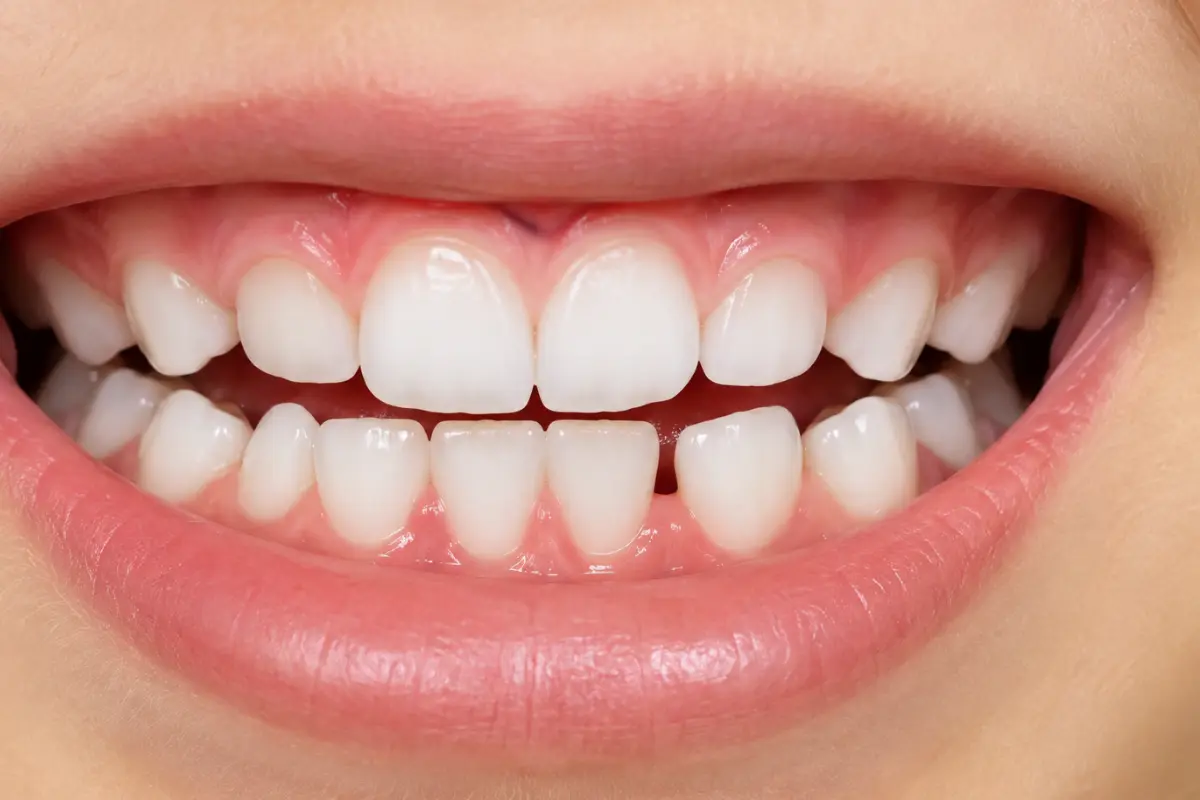
When baby teeth have enough space between them, a toothbrush can reach the open spaces more easily. However, as more teeth come in and the spaces become tighter, toothbrush bristles may not reach properly between touching teeth. This is when adding flossing to your child’s oral hygiene routine becomes important.
In many children, this point may happen around ages 2–3, but parents should not use this age as a strict rule. The position and spacing of the teeth are more important than the child’s birthday. A child may need flossing earlier or later depending on how their teeth have come through.
The American Academy of Pediatric Dentistry advises parents to ask their child’s dentist about flossing techniques and to start flossing when two or more teeth are too close together for a toothbrush to clean between them.
For younger children, parents usually need to do the flossing or help them with it. Children gradually develop the hand coordination needed to clean between their own teeth, so being able to hold floss does not always mean they can clean every area properly.
The Simple Tooth-Touch Test
For flossing, there is no exact age that applies to every child. Instead, parents can look at their child’s teeth and check whether any teeth are touching side by side.
If there is a gap between two teeth, flossing may not be needed between those particular teeth because a toothbrush can reach the open space more easily. However, when two teeth touch, plaque and food particles can collect between them, and toothbrush bristles may not reach these tight spaces properly.(American Dental Association) The ADA explains that toothbrush bristles alone cannot effectively clean between tight spaces, which is why cleaning between teeth is an important part of oral hygiene.
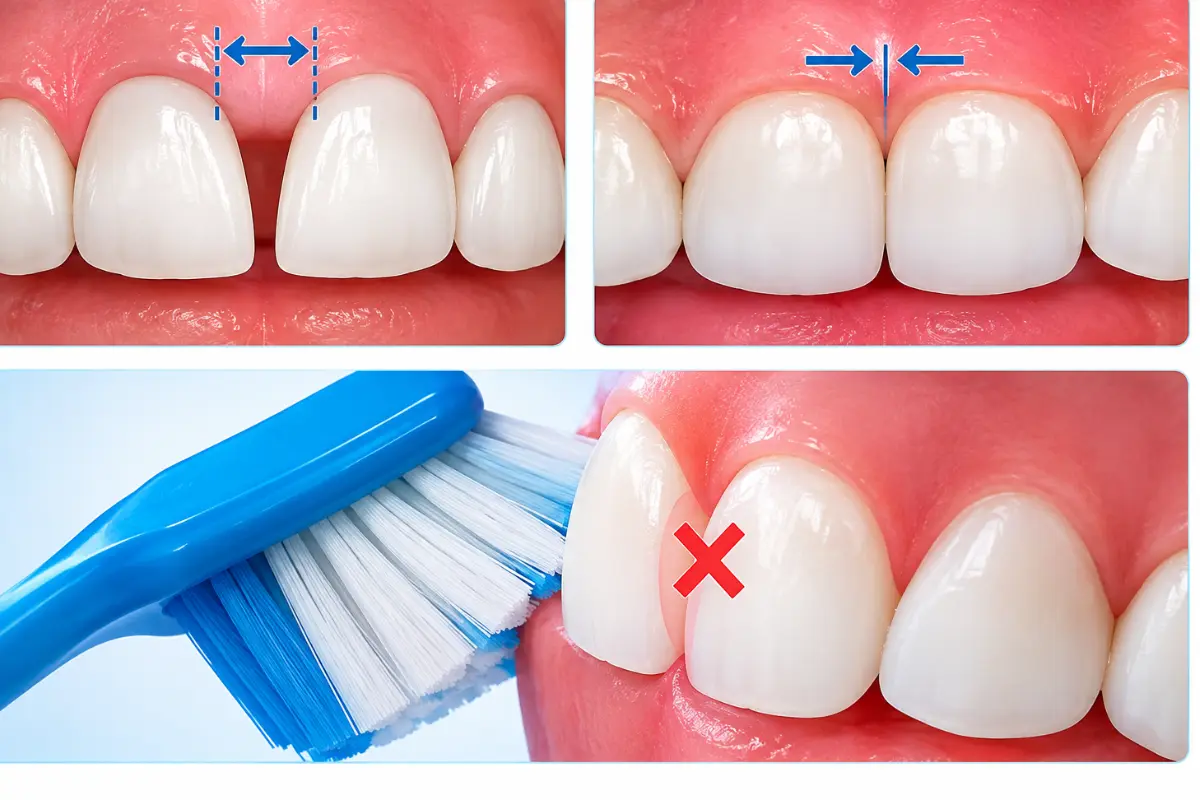
This simple tooth-touch test can help parents know when it may be time to add flossing to their child’s oral hygiene routine instead of relying only on a specific age.
It is also important to remember that not every space between teeth will look the same. Your child’s dentist can check the spacing during regular dental visits and tell you whether flossing or another type of interdental cleaner would be helpful.
Why Is Flossing Important?
Brushing is an important part of your child’s daily oral hygiene, but it does not clean every area of the mouth. Toothbrush bristles can clean the front, back, and chewing surfaces of the teeth, but they may not reach properly between teeth that are touching.
Dental floss is designed to clean these hard-to-reach areas. It can remove food particles and plaque from between teeth and along areas near the gumline. The American Dental Association recommends cleaning between the teeth as part of regular oral care because these areas can be difficult to clean with a toothbrush alone.
When plaque stays between teeth, it can build up over time. This can contribute to tooth decay and gum problems. Cleaning between the teeth helps remove this plaque before it becomes harder to clean.
Flossing is also important for children because baby teeth need proper care too. Although baby teeth eventually fall out, they help children chew, speak, and maintain space for permanent teeth. Keeping them clean is an important part of a child’s overall dental health.
Parents should not think of flossing as something that only becomes important when a child gets permanent teeth. Instead, it should be introduced when the spaces between the child’s teeth become difficult to clean with a toothbrush.
For most children, the goal is simple: brush the teeth regularly and clean between the teeth when the tooth surfaces are close enough that brushing cannot reach them properly.
How to Floss Your Child’s Teeth
Once your child’s teeth begin touching, parents should help them learn how to clean between those teeth. Young children may not have enough hand control to floss effectively on their own, so parents should usually help with the process.
The most important thing is to floss gently. You do not need to force the floss between the teeth or make the process uncomfortable for your child.

Step-by-Step Guide
1. Choose a suitable floss or interdental cleaner.
You can use regular dental floss, dental tape, or a child-friendly floss pick. The best option is one that allows you to clean the areas between your child’s teeth properly and comfortably. The ADA recognizes floss and other interdental cleaners as tools for cleaning between teeth.
2. Gently guide the floss between the teeth.
Place the floss between two teeth and gently move it through the contact point. Avoid snapping or forcing the floss down because this can hurt the gums.
3. Curve the floss around the tooth.
Once the floss is between the teeth, gently curve it around the side of one tooth. Move it up and down along the tooth surface to remove plaque and food.
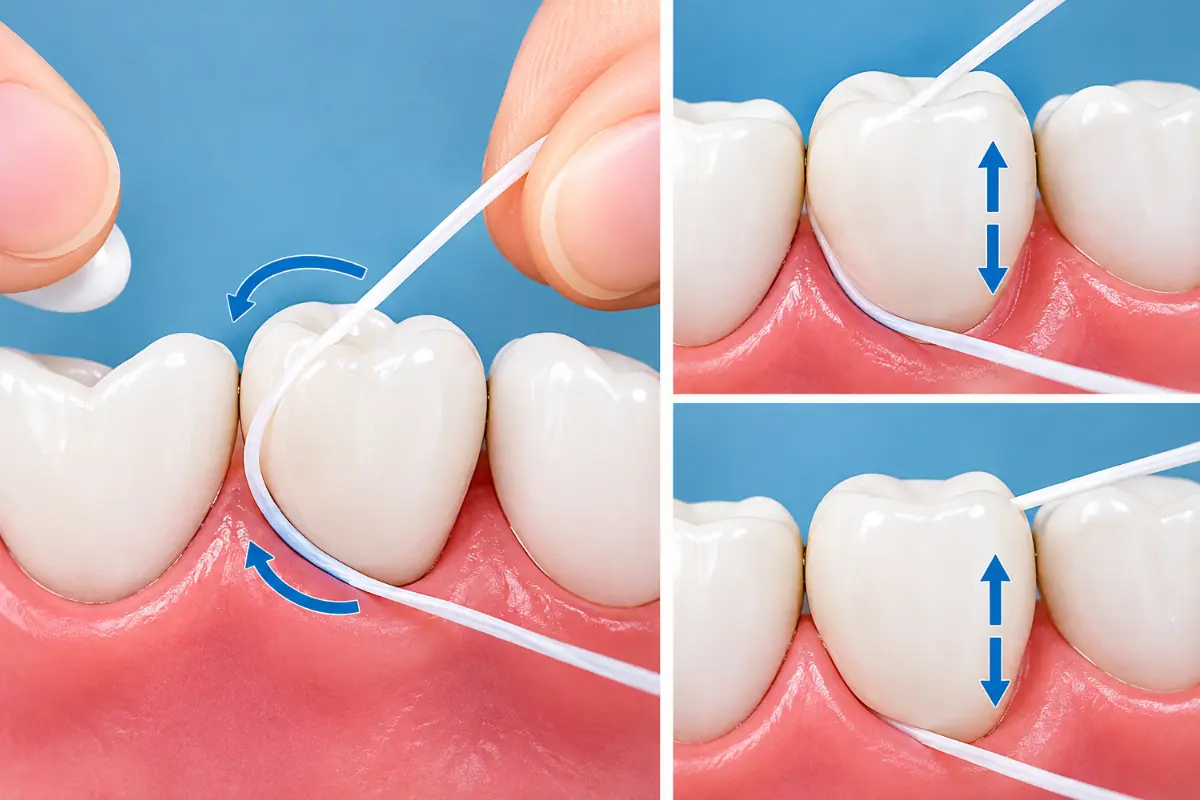
4. Clean the neighboring tooth.
Move the floss against the side of the other tooth in the same space. Cleaning both tooth surfaces is important because plaque can collect on either side.
5. Repeat between the touching teeth.
Continue the same gentle process between the other teeth that need cleaning. Use a clean section of floss as needed.
The NHS also recommends gently curving floss into a C-shape around each tooth and moving it up and down to clean away food and plaque.
How Often Should Kids Floss?
Once flossing is needed, cleaning between the teeth should become a regular part of your child’s oral hygiene routine. The ADA recommends cleaning between the teeth once a day with floss or another interdental cleaner.
Many parents find that flossing at night works well because it becomes part of the bedtime routine. However, the most important thing is to choose a time that your family can follow consistently.
Should Parents Floss Their Child’s Teeth?
Yes, younger children often need their parents or caregivers to help them floss. Flossing requires good hand control and coordination, and young children may find it difficult to guide the floss correctly between every tooth.
Parents can do the flossing for their child while also teaching them what they are doing. As the child grows, parents can allow them to practice holding and using the floss while continuing to supervise and help when needed.
The goal is not simply for a child to hold the floss. The child should be able to clean between the teeth properly and reach the areas that need cleaning.
Parents can also make flossing easier by creating a regular routine. For example, flossing can be done as part of the bedtime routine after brushing or at another consistent time that works for the family.
When Can Kids Floss Their Own Teeth?
There is no single age when every child becomes ready to floss independently. Children develop coordination at different rates.
Parents should look at how well their child can handle the floss and whether they can clean between all the needed teeth without missing areas. Younger children will generally need more help, while older children can gradually take more responsibility for their oral hygiene.
Even when a child starts flossing independently, parents can still check their technique from time to time. If the child struggles with tight spaces or misses certain areas, parents can help.
Your child’s dentist can also show you the correct technique and help you decide when your child is ready to manage flossing more independently.
Common Flossing Mistakes Parents Should Avoid
Flossing is simple, but parents can make a few common mistakes when helping their children.
- Waiting for a specific age: Do not rely only on your child’s age. Check whether teeth are touching or too close for a toothbrush to clean properly.
- Flossing only when food gets stuck: Flossing is not only for removing visible food. It also helps remove plaque between teeth.
- Snapping the floss between teeth: Avoid pushing or snapping floss forcefully into the gums. Use gentle movements instead.
- Skipping tight spaces: The areas where teeth touch are exactly where a toothbrush may have difficulty reaching.
- Using too much force: Floss should be moved gently along the sides of the teeth.
- Expecting a young child to floss alone: Young children may not yet have the coordination needed to clean between every tooth properly.
- Making flossing stressful: If your child dislikes flossing, try to keep the routine calm and consistent rather than turning it into a daily argument.
The goal is to make flossing a normal part of your child’s oral hygiene routine, not something that only happens when food becomes stuck.
What If My Child’s Gums Bleed?
Some children may notice a small amount of bleeding when they first start flossing, especially if the gums are irritated or the area has not been cleaned regularly. However, parents should pay attention to how the floss is being used and make sure it is not being forced against the gums.
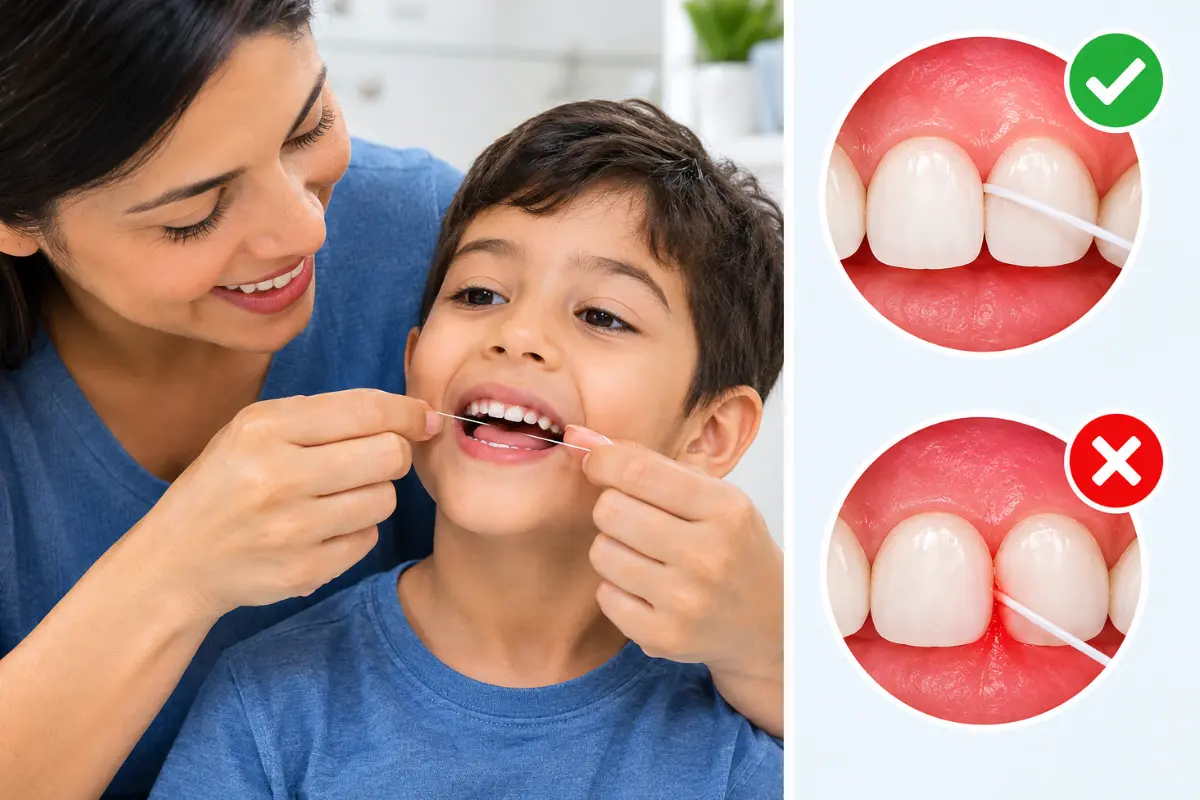
Use gentle movements and guide the floss carefully between the teeth. If your child’s gums continue to bleed regularly, appear swollen, or become painful, talk to your child’s dentist.
Plaque that remains around the teeth and gums can contribute to gum inflammation. The ADA notes that when plaque is not removed, the gums can become swollen or bleed during brushing or cleaning between the teeth.
If you are unsure whether your child’s bleeding is related to flossing technique or another dental problem, a dentist can examine the gums and recommend the appropriate care.
When to Ask a Dentist?
Parents can ask their child’s dentist for guidance whenever they are unsure about when or how to start flossing. A dentist can examine the child’s teeth and check whether the spaces between them can be cleaned with a toothbrush or need additional interdental cleaning.
You should also talk to a dentist if your child has:
- Frequent or persistent gum bleeding
- Swollen or painful gums
- Food that regularly gets stuck in one particular area
- Very close or crowded teeth that are difficult to clean
- Pain when flossing
- Difficulty cleaning between certain teeth
- Questions about the right flossing technique
Regular dental visits are also a good opportunity to ask whether your child’s current brushing and flossing routine is working properly. Pediatric dental guidance emphasizes the role of the dental visit in teaching caregivers and children proper oral hygiene techniques.
Final Thoughts
When Should Kids Start Flossing? There is no need to wait for a specific birthday. The simple tooth-touch test can help parents know when it may be time to add flossing to their child’s oral hygiene routine.
When two teeth begin touching and a toothbrush cannot clean properly between them, cleaning between those teeth becomes important. Young children may need their parents to do the flossing for them until they develop enough coordination to do it properly on their own.
Starting at the right time, using a gentle technique, and making flossing part of a regular routine can help your child develop good oral hygiene habits. If you are unsure whether your child needs to start flossing, ask their dentist to check the spacing between their teeth and guide you on the best approach.
Children’s Flossing FAQs
- 1 What age should kids start flossing?There is no exact age for every child. Children should generally start flossing when two or more teeth are touching or are too close together for a toothbrush to clean properly. This can happen around ages 2–3 for some children, but the timing varies.
- 2 Should I floss my child's baby teeth?Yes, if your child's baby teeth are touching and a toothbrush cannot clean properly between them, flossing can help clean those areas. Baby teeth also need regular care to stay healthy.
- 3 Do kids need to floss every day?Once flossing is needed, daily cleaning between the teeth is recommended. The ADA recommends cleaning between teeth once a day with floss or another interdental cleaner.
- 4 Can kids use floss picks?Yes. Floss picks are one option for cleaning between teeth. The important thing is that the tool allows you to clean between the teeth effectively and is used gently. The ADA recognizes floss picks and other interdental cleaners as options for cleaning between teeth.
- 5 When can kids floss their own teeth?There is no single age that works for every child. A child can gradually start flossing independently when they have enough coordination to use floss correctly and clean between the needed teeth. Parents should continue helping or checking their child's technique until they are confident the child can clean properly.
- 6 Why do my child's gums bleed when flossing?Gums can bleed when they are irritated or when plaque has built up around the gumline. Using too much force can also irritate the gums. If bleeding continues regularly or occurs with swelling or pain, ask your child's dentist to check the gums.
- 7 Is flossing necessary if my child's teeth have gaps?Not necessarily between every tooth with a visible gap. A toothbrush may reach some open spaces more easily. However, your child's teeth can have different spacing in different areas, so a dentist can advise whether flossing is needed.
- 8 What is the easiest way to floss a child's teeth?The easiest method is the one that lets you clean between the teeth gently and thoroughly. Parents can use regular dental floss, dental tape, or a suitable floss pick. For younger children, parents should usually do the flossing or help them.