How to Improve Dental Health for Kids is a common concern for parents who want their children to have healthy, strong teeth and bright smiles for life. Good oral care should begin as soon as a child’s first baby teeth appear.
Starting oral health care early can help prevent cavities, gum disease, and other oral health problems later in life. Healthy and strong teeth are important for proper chewing, speaking clearly, confidence, and overall well-being.
By following simple daily habits such as proper brushing, flossing, regular dental checkups, and limiting sugary foods, parents can help their children achieve long-term oral health.
Why Is Dental Health Important for Kids?
Good dental health is essential for a child’s overall growth and development. Healthy baby teeth do much more than create a bright smile. They help children eat comfortably, speak clearly, and support the proper development of permanent teeth. Building healthy oral hygiene habits from an early age also helps prevent many common dental problems later in life.
How Healthy Teeth Support a Child’s Growth
Good dental health plays a vital role in the development and overall growth of children. Strong, healthy teeth are important for chewing food properly, speaking clearly, and maintaining a bright, confident smile throughout childhood. Baby teeth are also important because they help children chew food, support speech development, and hold space for the permanent teeth to erupt in the correct position.
Common Dental Problems in Children
When children lose baby teeth early due to tooth decay or injury, it can affect the alignment of their permanent teeth and lead to dental problems later in life. Maintaining good oral health provides long-term benefits.
Children with strong, healthy teeth have a lower risk of gum disease, cavities, tooth pain, and other dental infections. To reduce the risk of dental problems, children should brush and floss, avoid sugary foods and drinks, eat a balanced diet, and have regular dental checkups.
Poor oral hygiene allows plaque to build up on the teeth, creating an environment where harmful bacteria produce acids that can damage tooth enamel. This is why consistent daily care is so important.
By building healthy oral hygiene habits early, parents can help protect their children’s teeth, support lifelong dental health, and prevent future dental problems.
How to Improve Dental Health for Kids 10 Expert Tips
Healthy oral hygiene habits at home should start from an early age. Teaching children how to care for their teeth helps protect them from gum disease, cavities, and other oral health problems.
By following simple daily habits and expert dental care practices, parents can help establish healthy oral hygiene habits that last a lifetime.Learning how to improve dental health for kids starts with simple daily habits that parents can encourage at home.
1. Start Oral Care from an Early Age
Developing healthy oral hygiene habits from an early age is one of the best ways to improve children’s dental health. Before the first baby tooth appears, parents should gently clean their baby’s gums with a clean, soft cloth after every feeding. When the first baby tooth erupts, use a soft-bristled infant toothbrush and a rice-grain-sized amount of fluoride toothpaste, as recommended by the American Dental Association (ADA). A daily oral care routine from an early age helps reduce the risk of tooth decay.
Although baby teeth eventually fall out, they play an important role in supporting a child’s oral health. They help children chew food, develop clear speech, and hold space for permanent teeth. Parents should schedule their child’s first dental visit within six months of the first tooth appearing or by the first birthday. Early dental checkups help monitor oral development, detect potential problems early, and provide guidance on proper oral care.
2. Teach Proper Brushing Techniques
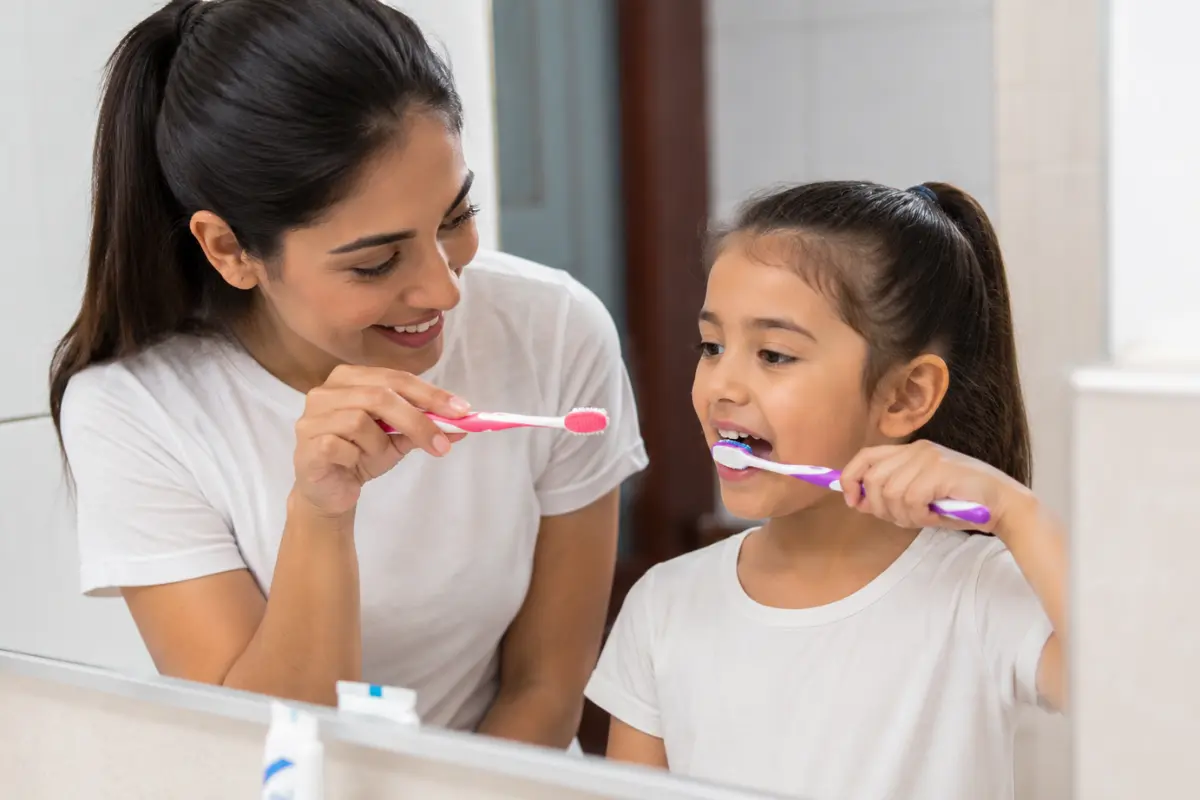
Proper brushing is the foundation of good oral health. Children should brush their teeth twice a day using a soft-bristle toothbrush and fluoride toothpaste as recommended by the American Dental Association (ADA). Parents should ensure that brushing lasts for at least two minutes and that all tooth surfaces are cleaned thoroughly. Teaching proper brushing techniques from an early age helps children build healthy habits that last a lifetime
3. Encourage Your Child To Floss Every Day
Flossing is very important for healthy teeth because a toothbrush cannot effectively clean between teeth. When two teeth begin to touch, children should start flossing. Proper and regular flossing can help prevent cavities, remove plaque and food particles, and support gum health.
4. Limit Sugary Foods and Drinks
Sugar is one of the leading causes of tooth decay in children. When children eat sweets, chocolates, and other sugary foods or drinks, bacteria in the mouth produce acids that can damage tooth enamel. Parents should limit sugary snacks and encourage healthier alternatives such as fruits, nuts, and water.

5. Provide a Tooth-Friendly Diet.
A tooth-friendly diet plays an essential role in maintaining healthy gums and strong teeth. Foods rich in calcium, such as yogurt, milk, and cheese, help strengthen teeth. Vitamin D helps the body absorb calcium effectively, while fruits and vegetables help naturally clean the teeth and stimulate saliva production. Water is also an excellent choice for supporting overall dental health.
6. Schedule Regular Dental Checkups
The American Academy of Pediatric Dentistry (AAPD) recommends that children have their first dental visit within six months of the first tooth appearing or by their first birthday. Early dental checkups enable dentists to monitor oral development, detect potential issues early, and advise parents on oral hygiene, fluoride use, and a healthy diet.
7. Change Your Child’s Toothbrush Regularly
A worn-out toothbrush cannot clean teeth effectively and may allow plaque to build up over time. Parents should replace their child’s toothbrush every 3–4 months or sooner if the bristles become worn or frayed. It is also important to replace the toothbrush after an illness. Using a clean, new toothbrush supports better oral hygiene and helps keep children’s teeth and gums healthy.
8. Protect Your Child’s Teeth During Sports
Some children are very active during sports and are at a higher risk of dental injuries. During physical activities, protective equipment should be used to help protect the teeth from fractures and impact injuries. In particular, a well-fitted mouthguard should be used for comfort and maximum protection. Preventive care is always better than emergency dental treatment.
9. Make Oral Hygiene Fun
Children enjoy and are more likely to follow activities that they find fun. By using music, 2 minute timers, reward charts, games, or colorful toothbrushes, parents can make brushing more enjoyable for their children. Turning oral hygiene into a fun activity encourages consistency and helps children develop lifelong healthy habits.
10. Be a Good Role Model for Healthy Dental Habits
Children learn best by observing their parents’ daily habits. They are more likely to develop healthy oral hygiene habits when they see their parents brushing and flossing regularly. Brushing together as a family encourages lifelong healthy habits and helps parents become strong role models for good oral health.
When Should Parents See a Dentist?
Regular dental checkups are important for keeping children’s teeth and gums healthy. Parents should also take their child to a dentist if they notice any signs of dental problems.
Tooth pain, swollen or bleeding gums, tooth sensitivity, or a damaged tooth may need professional dental care. Parents should also seek dental advice if a child has difficulty chewing or has signs of a dental infection.
Early dental visits can help identify problems before they become more serious. A dentist can also check the development of the child’s teeth and provide parents with guidance on brushing, flossing, fluoride use, and healthy dental habits.
If a child experiences a dental injury, severe tooth pain, or swelling, parents should seek dental care promptly. Regular checkups and early treatment can help protect children’s oral health and support healthy teeth as they grow.

Kids Dental Health FAQ
- 1. How can I improve my child's dental health?The best way to improve your child's dental health is to establish healthy oral hygiene habits early. Brushing twice a day with fluoride toothpaste, flossing daily, providing a tooth-friendly diet, limiting sugary foods and drinks, and scheduling regular dental checkups can help maintain healthy teeth and gums.
- 2. When should children start flossing?Children should start flossing as soon as two teeth begin touching each other. Daily flossing removes plaque and food particles from between the teeth, helping prevent cavities and support healthy gums.
- 3. How often should children visit the dentist?Children should have their first dental visit within six months after the first tooth appears or by their first birthday. After that, regular dental checkups every six months are generally recommended to monitor oral health and prevent dental problems.
- 4. When should I start brushing my baby's teeth?Parents should begin cleaning their baby's gums before the first tooth appears, using a clean, soft cloth. Once the first tooth erupts, use a soft-bristled infant toothbrush with a rice-grain-sized amount of fluoride toothpaste as recommended by the American Dental Association (ADA).
- 5. What foods help keep children's teeth healthy?A tooth-friendly diet helps maintain healthy teeth and gums. Foods rich in calcium, such as milk, yogurt, and cheese, help strengthen teeth, while fruits, vegetables, vitamin D, and water support good oral health and reduce the risk of tooth decay.
Conclusion
Knowing how to improve dental health for kids starts with early habits, consistency, and parental guidance. Proper brushing and flossing, a tooth-friendly diet, and regular dental checkups play a vital role in building strong oral health.
By following these 10 expert tips, parents can help their children develop healthy teeth, strong gums, and lifelong oral hygiene habits.