
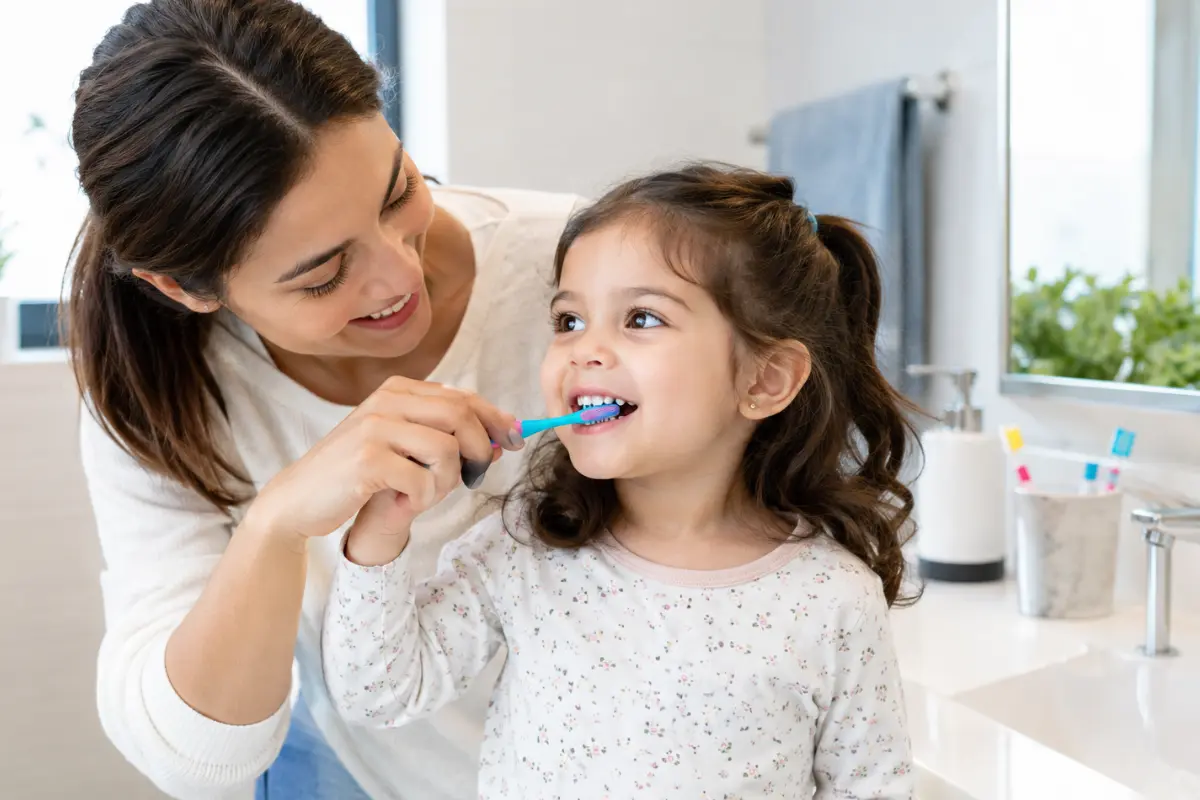
Choosing the right fluoride toothpaste for kids can feel confusing, especially when parents hear different advice about how much toothpaste to use. Too little may make it harder to get the full cavity-prevention benefit, while using too much can increase the amount a young child swallows.
The good news is that you do not need a large strip of toothpaste to protect your child’s teeth. For children under 3, the American Dental Association recommends a smear about the size of a grain of rice. Children ages 3 through 6 should use no more than a pea-sized amount. Adults should supervise brushing and help children use the right quantity.
This guide explains the recommended amount at each age, when to start using fluoride toothpaste, how to choose a suitable product, and how to reduce the risk of dental fluorosis.
Why Is Fluoride Toothpaste Important for Kids?
Fluoride is a mineral that helps protect tooth enamel against the acids that cause cavities. Children need this protection because both baby teeth and newly erupted permanent teeth can develop tooth decay.
Every day, plaque bacteria feed on sugars from food and drinks. These bacteria produce acids that gradually remove minerals from tooth enamel. This process is called demineralization. Fluoride helps replace lost minerals and makes the enamel more resistant to future acid attacks.
Using fluoride toothpaste regularly can help parents reduce their child’s risk of cavities. It also supports healthy oral-care habits from the time the first tooth appears.
Here is why fluoride matters:
- Helps prevent cavities: Fluoride makes enamel more resistant to acid damage.
- Supports remineralization: It helps repair early mineral loss before a cavity becomes established.
- Protects baby teeth: Primary teeth can develop decay and may become painful if cavities are left untreated.
- Protects permanent teeth: Fluoride remains useful as children grow and their permanent teeth emerge.
Fluoride helps strengthen tooth enamel and makes teeth more resistant to acid attacks that cause cavities. The CDC explains how fluoride helps prevent tooth decay and supports healthy teeth.
“How Much Fluoride Toothpaste Should Kids Use at Each Age?”
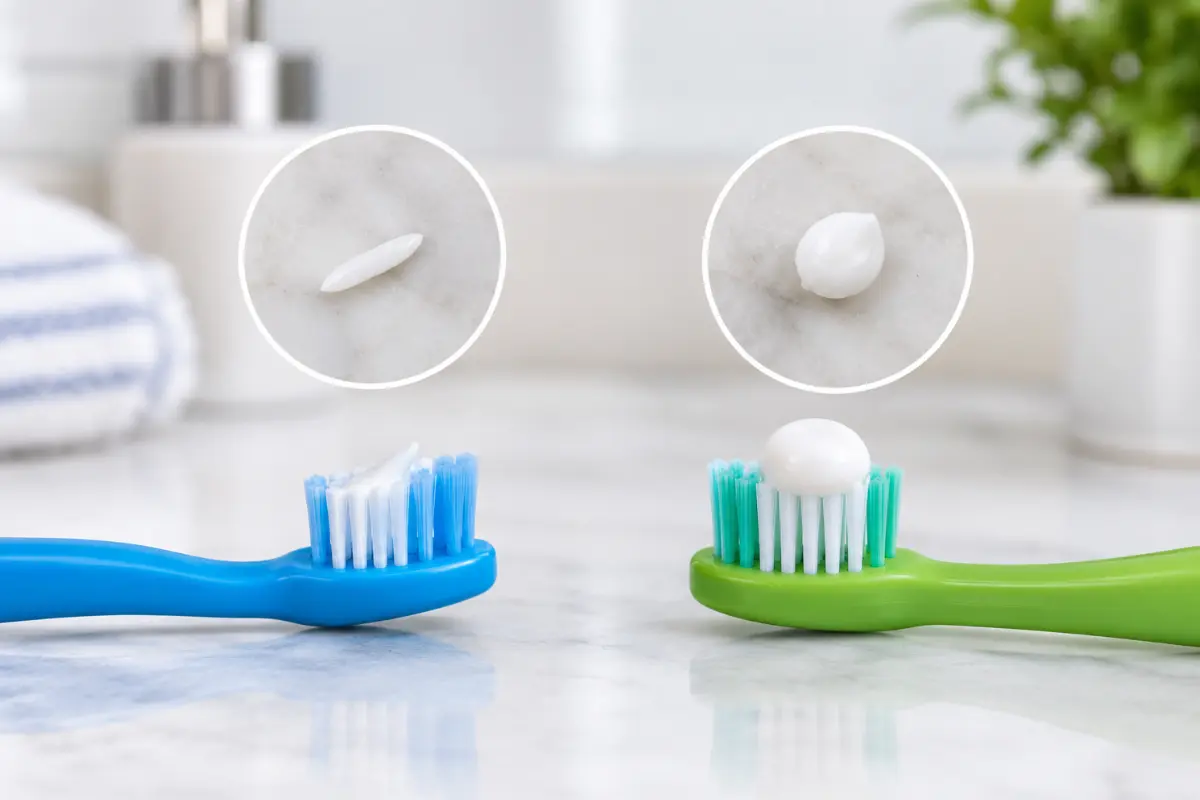
The correct amount of fluoride toothpaste for kids depends mainly on age. The American Dental Association (ADA) recommends a rice-grain-sized smear for children younger than 3 and a pea-sized amount for children ages 3 through 6.
The recommended amount of fluoride toothpaste changes as children grow. Here’s how much to use at each age.
| Child’s age | Recommended amount | What parents should do |
|---|---|---|
| First tooth to under age 3 | A smear the size of a grain of rice | Apply the toothpaste and brush the child’s teeth |
| Ages 3–6 | No more than a pea-sized amount | Dispense the toothpaste and supervise brushing |
| Older than 6 | Follow the product label and the child’s dental guidance | Encourage thorough brushing and make sure the child spits out the excess |
For children older than 6, the ADA’s standard age-specific quantity guidance above does not set a separate larger amount. Avoid automatically increasing the amount to cover the whole brush; follow the product instructions and any advice from your child’s dentist.
Babies and Toddlers Under Age 3: A Rice-Grain-Sized Smear
Once your baby’s first tooth appears, start brushing with a soft, age-appropriate toothbrush and a very small smear of fluoride toothpaste. The amount should be about the size of a single grain of rice.
This may look like very little toothpaste, but it is the recommended amount for this age group. A thick stripe is unnecessary and increases the amount your child could swallow.
Parents should brush for their babies and toddlers because young children cannot reliably clean every tooth surface themselves. Keep the toothpaste tube out of reach between brushing sessions, and use only the small amount needed.
Children Ages 3–6: A Pea-Sized Amount
When a child reaches age 3, the recommended amount changes to no more than a pea-sized drop of fluoride toothpaste.
A pea-sized amount is enough for routine brushing without unnecessarily loading the toothbrush with paste. It is especially important to supervise children in this age group because many are still learning to spit toothpaste out instead of swallowing it.
Try this simple routine:
- An adult dispenses a pea-sized amount onto the toothbrush.
- Help the child brush all tooth surfaces, including the front, back, and chewing surfaces.
- Encourage the child to spit out the toothpaste rather than swallow it.
- Store the tube safely after brushing.
Do not allow your child to squeeze toothpaste onto the brush without supervision. Children may use much more than they need because the larger amount looks fun or tastes pleasant.
Children Over Age 6: How Much Toothpaste Is Enough?
Children older than 6 can generally follow the toothpaste product’s instructions while continuing to use a fluoride toothpaste suitable for everyday brushing. They should not automatically use a larger quantity simply because their mouths are bigger.
By this age, many children can spit more reliably, but brushing skills and habits still vary. Some may need help reaching the back teeth or brushing for long enough. Continue checking their technique until they can clean their teeth effectively and consistently.
For most families, a practical approach is to use the amount stated on the toothpaste label, encourage twice-daily brushing, and follow any individualized advice from the dentist. Children at higher risk of cavities may need additional preventive care, but prescription-strength toothpaste should only be used as directed by a dental professional.
When Should Kids Start Using Fluoride Toothpaste?
Dental care should begin before a child has a full set of teeth. Start brushing when the first baby tooth erupts, which often happens around 6 months of age, although timing varies from child to child.
Baby teeth matter even though they eventually fall out. They help children chew, support speech development, and maintain space for permanent teeth. Decay in a baby tooth can cause pain and infection, so it should not be ignored.
To build a healthy routine:
- Brush in the morning and again before bedtime.
- Use a soft baby toothbrush with a small head.
- Measure the toothpaste according to your child’s age.
- Brush gently along the tooth surfaces and gumline.
- Arrange a first dental visit by the child’s first birthday or within six months of the first tooth appearing, whichever comes first.
If your baby is younger than 2, ask your child’s dentist or physician about fluoride toothpaste, particularly if you are unsure about the child’s cavity risk or existing fluoride exposure.
How to Choose the Right Fluoride Toothpaste for Kids
The best toothpaste for a child is one that provides appropriate cavity protection and can be used safely under adult supervision. It does not need to feature cartoon characters or a special children’s flavor to be effective.
When choosing a product, check the active ingredients, directions, age guidance, and whether it carries the ADA Seal of Acceptance.
What Fluoride Level Should Kids’ Toothpaste Have?
Over-the-counter fluoride toothpastes sold in the United States generally contain 1,000 to 1,500 parts per million (ppm) of fluoride. The ADA recommends choosing a fluoride toothpaste with the ADA Seal of Acceptance.
You can check the product label for an active fluoride ingredient, such as sodium fluoride, stannous fluoride, or sodium monofluorophosphate. These are used in fluoride toothpastes.
Do not confuse everyday fluoride toothpaste with prescription-strength products. Some prescription toothpastes contain 5,000 ppm fluoride and may be recommended for particular dental needs. They are not the default choice for every child.
If your child has frequent cavities, enamel problems, or other specific oral-health concerns, ask a pediatric dentist which product is appropriate.
Should You Choose Fluoride-Free or Fluoride Toothpaste?
Fluoride-free training toothpaste may be sold for young children, but it does not provide the same fluoride-based cavity protection as fluoride toothpaste.
A fluoride-free product may help a child get used to the sensation of brushing, but it should not be assumed to provide equivalent protection against cavities. If you are considering one because your child tends to swallow toothpaste, ask a dentist how to manage the swallowing risk while maintaining cavity prevention.
The American Academy of Pediatric Dentistry (AAPD) supports the use of fluoride as an important part of preventing tooth decay in children. The right fluoride recommendations may depend on a child’s age, cavity risk, and individual dental needs.
Also remember that a child’s total fluoride exposure matters. Drinking water, other fluoride products, and individual cavity risk can influence professional recommendations.
How to Brush Kids’ Teeth Safely With Fluoride Toothpaste
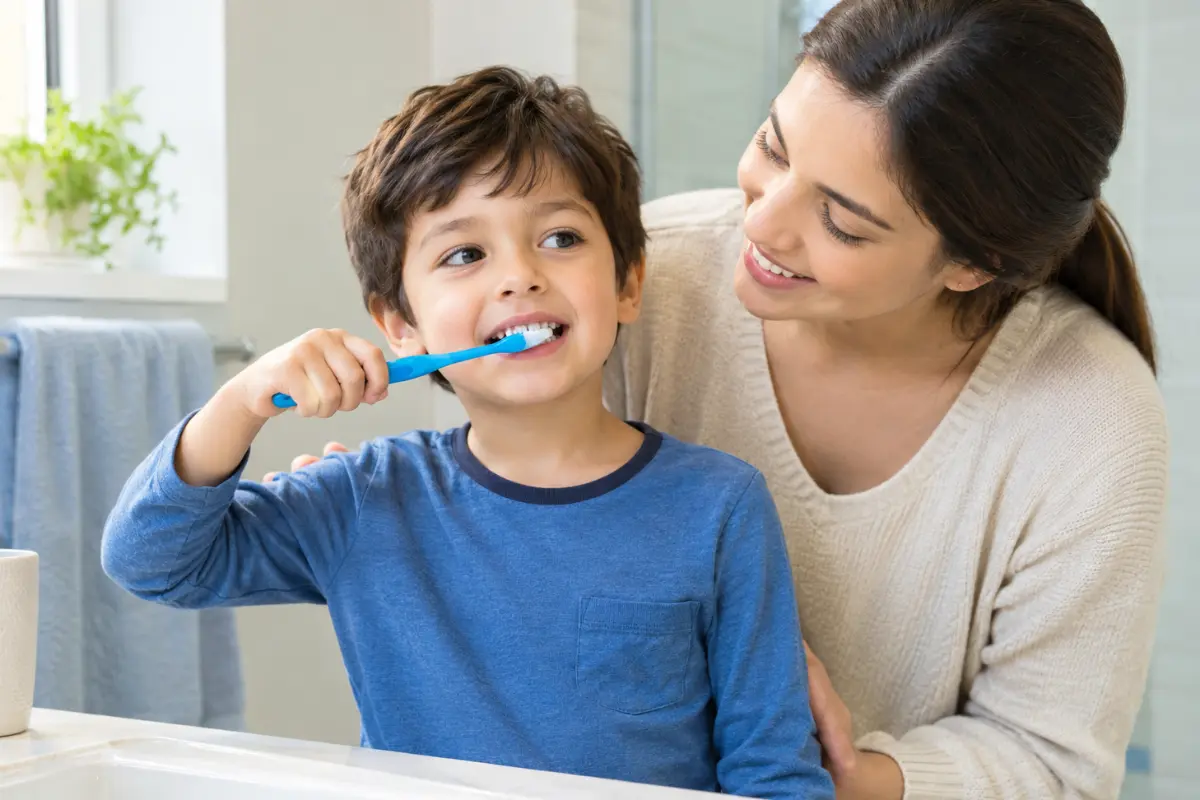
Using the right amount of toothpaste is only one part of an effective routine. Technique, consistency, and adult supervision also matter.
The ADA recommends brushing twice daily with fluoride toothpaste. A two-minute brushing routine can help cover all tooth surfaces thoroughly.
Follow these steps:
- Choose a suitable toothbrush. Use a small head and soft bristles that fit comfortably in your child’s mouth.
- Measure the toothpaste. Use a rice-sized smear under age 3 and no more than a pea-sized amount from ages 3 through 6.
- Brush gently. Clean the front, back, and chewing surfaces of each tooth. Avoid scrubbing hard.
- Supervise the routine. Help younger children brush and check older children’s technique until they can do it well independently.
- Teach spitting. Encourage your child to spit out the excess toothpaste rather than swallow it.
- Avoid excessive rinsing. Follow the toothpaste label and your dentist’s advice; rinsing heavily right after brushing may wash away some of the fluoride left on the teeth.
A useful habit is to brush together every morning and evening. An adult can dispense the toothpaste, guide the child through each area, and make sure brushing does not become a rushed 20-second activity.
Can Too Much Fluoride Toothpaste Harm Children?
Fluoride toothpaste is effective when used as directed, but children can swallow toothpaste more easily than adults. Repeatedly swallowing more fluoride than recommended while permanent teeth are developing can increase the risk of dental fluorosis.
That does not mean a parent should panic over every small accidental swallow. The key is to use the correct amount, supervise brushing, and store toothpaste where children cannot eat it or squeeze it out for fun.
What Is Dental Fluorosis, and How Can Parents Prevent It?
Dental fluorosis is a change in the appearance of enamel that can occur when too much fluoride is ingested while teeth are developing. Very mild fluorosis may appear as faint white marks; more pronounced cases can cause visible discoloration or pitting. Moderate and severe forms are uncommon.
Fluorosis risk can be reduced by managing how much fluoride toothpaste a child uses and limiting unnecessary swallowing.
Parents can help by:
- Measuring the recommended quantity every time.
- Brushing younger children’s teeth themselves.
- Teaching children to spit out toothpaste when developmentally ready.
- Keeping toothpaste tubes out of reach.
- Asking a dentist before adding fluoride supplements or other fluoride products.
Do not stop using fluoride toothpaste simply because fluorosis is a concern. Instead, ask your child’s dentist how to balance cavity prevention with the child’s age, swallowing ability, and overall fluoride exposure.
According to the CDC’s guidance on dental fluorosis, parents can help reduce the risk by supervising brushing, using the recommended amount of fluoride toothpaste, and encouraging children to spit it out instead of swallowing it.
Common Fluoride Toothpaste Mistakes Parents Should Avoid
Small changes to the daily routine can make fluoride toothpaste safer and more useful. Watch out for these common mistakes:
- Using too much toothpaste: A long strip is unnecessary for young children. Stick to the age-appropriate amount.
- Letting toddlers brush alone: Young children may swallow the paste or miss important tooth surfaces.
- Assuming baby teeth do not matter: Baby teeth can develop cavities and may need treatment.
- Choosing toothpaste only by flavor: A pleasant taste may help with cooperation, but fluoride content and product instructions matter more.
- Adding fluoride products without guidance: Supplements, rinses, and prescription-strength products may not be necessary for every child.
- Stopping brushing when a child resists: Keep the routine calm and consistent, using age-appropriate encouragement and help.
- Leaving toothpaste within reach: A child may squeeze out or swallow much more than the intended amount.
If brushing is a daily struggle, try a predictable morning and bedtime routine, let your child choose between suitable toothbrush designs, and supervise rather than expecting perfect independent brushing too early.
When Should Parents Ask a Pediatric Dentist About Fluoride?
Every child has different oral-health needs. A pediatric dentist can assess cavity risk and recommend suitable home care based on the child’s age, teeth, habits, and fluoride exposure.
Arrange a dental discussion if:
- Your child develops cavities despite brushing regularly.
- You are uncertain about using fluoride toothpaste for a child younger than 2.
- Your child frequently swallows toothpaste and cannot yet spit reliably.
- You are considering fluoride supplements, mouth rinses, or prescription-strength toothpaste.
- Your child has enamel defects, unusual tooth discoloration, or sensitivity.
- Your drinking water’s fluoride content is uncertain and your child has a high risk of cavities.
The American Academy of Pediatric Dentistry supports twice-daily brushing with appropriate amounts of fluoride toothpaste and recommends that fluoride care be considered alongside a child’s individual cavity risk.
A dentist can also explain whether professional fluoride varnish or another preventive treatment may be helpful. These decisions should be individualized rather than based on toothpaste amount alone.
Conclusion
Choosing the right fluoride toothpaste for kids starts with using the right amount for your child’s age. A rice-sized smear is recommended for children younger than 3, while children ages 3 through 6 should use no more than a pea-sized amount. Older children should follow product directions and any individualized dental advice.
Brush twice daily, supervise children who still need help, and teach them to spit out excess toothpaste rather than swallow it. Fluoride can play an important role in preventing cavities when used correctly. If you are uncertain about your child’s fluoride needs, ask a pediatric dentist for guidance tailored to their oral health.
FAQs About Fluoride Toothpaste for Kids
- 1 Is fluoride toothpaste safe for toddlers?Fluoride toothpaste is recommended for children in an age-appropriate amount, with adult supervision. For children younger than 3, the ADA recommends no more than a rice-sized smear. For children younger than 2, CDC advises consulting a dentist or physician before introducing fluoride toothpaste.
- 2 What happens if a child swallows fluoride toothpaste?Accidentally swallowing a tiny amount during brushing is different from eating a large amount. Use only the recommended quantity and teach your child to spit. If your child swallows a large amount, contact Poison Control in the United States at 1-800-222-1222 for guidance.
- 3 Should kids rinse after brushing with fluoride toothpaste?Avoid excessive rinsing immediately after brushing, because it can wash away some fluoride left on the teeth. Teach children to spit out the excess toothpaste and follow the product directions or their dentist’s advice.
- 4 Can babies use fluoride toothpaste every day?The ADA recommends brushing from the first tooth with a rice-sized smear of fluoride toothpaste. CDC advises consulting a dentist or physician before introducing it to children younger than 2, so parents of babies should discuss the best approach with their child’s healthcare professional.
- 5 Is fluoride-free toothpaste better for children?Not necessarily. Fluoride toothpaste helps prevent cavities, while fluoride-free toothpaste does not provide the same fluoride-based protection. Ask a dentist for guidance if you are concerned about swallowing or your child’s fluoride exposure.