
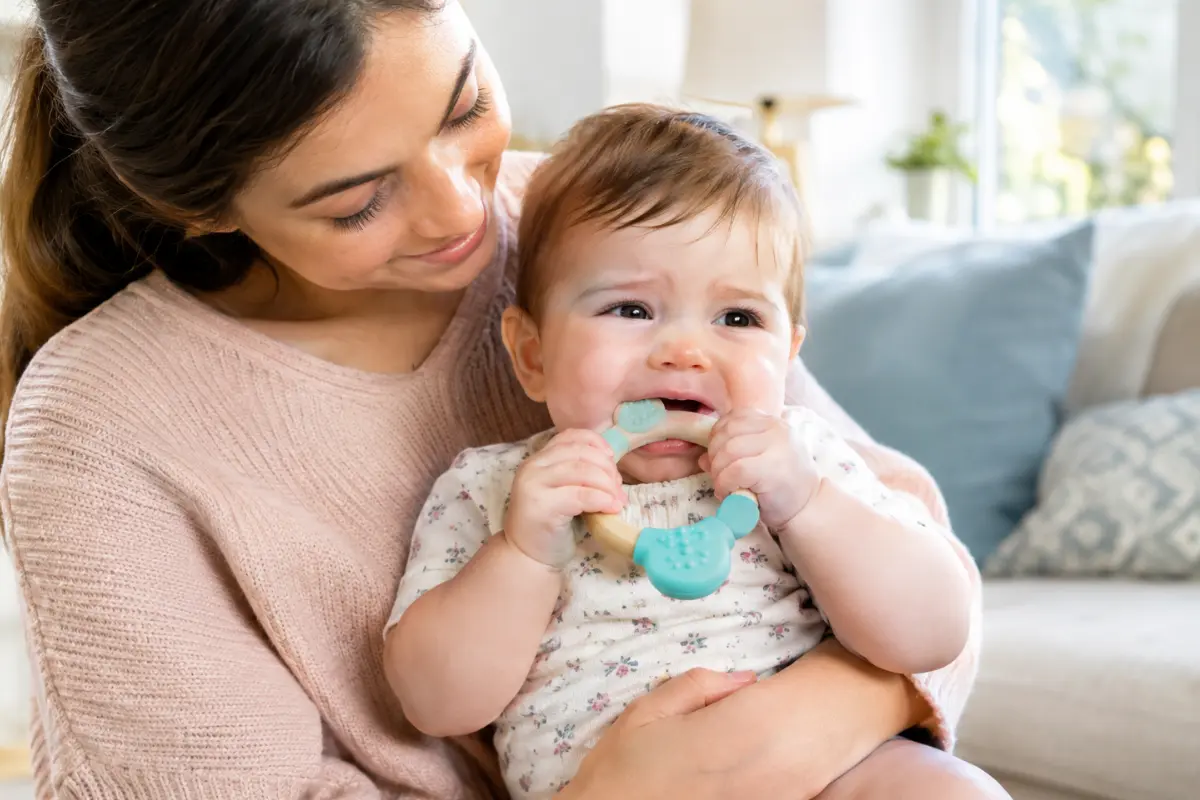
When your baby suddenly becomes fussy, drools more, or wants to chew on everything, teething may be the reason. Baby teething symptoms and remedies can vary from one child to another, and some babies have very little discomfort when their first teeth appear.
Teething usually begins around the middle of the first year, although the timing can vary. Sore or swollen gums, increased drooling, chewing, and mild fussiness are common signs. Knowing the difference between normal teething discomfort and symptoms of illness can also help you decide when your baby needs medical attention.
In this guide, you’ll learn the most common baby teething symptoms and remedies, how to soothe sore gums safely, which products to avoid, how teething may affect sleep, and how to care for your baby’s first teeth.
When Do Babies Start Teething?
Most babies begin teething around 6 months, although some start earlier and others later. The first teeth may appear anywhere from roughly 4 to 7 months for many babies, and there can be considerable variation between children. The American Academy of Pediatrics notes that most babies get their first teeth during the first year of life, with the lower front teeth usually appearing first.
Your baby already has all 20 primary teeth developing beneath the gums at birth. Over the next few years, these teeth gradually emerge. By around age 3, most children have a complete set of 20 baby teeth.
Teething does not happen all at once. You may notice periods when your baby’s gums seem more tender, followed by calmer days. Some babies show obvious signs before a tooth appears, while others seem comfortable until the tooth becomes visible.
The first tooth is an exciting milestone, but it is also the time to begin thinking about regular baby tooth care.
Understanding your baby’s first teeth can make it easier to recognize baby teething symptoms and remedies that may provide comfort during this stage.
What Are the Common Baby Teething Symptoms and Remedies?

Not every baby experiences the same symptoms, so the most helpful baby teething symptoms and remedies can vary from one child to another.
Common baby teething symptoms can include:
- Drooling: Your baby may produce much more saliva than usual.
- Sore or tender gums: The gum tissue around an emerging tooth may look swollen or feel sensitive.
- Chewing and biting: Babies often want to chew on fingers, toys, or safe teething objects.
- Fussiness: Mild gum discomfort can make a baby more irritable than usual.
- Trouble sleeping: Discomfort may make it harder for some babies to settle at bedtime.
- Changes in appetite: A baby with tender gums may temporarily be less interested in certain foods.
- A rash around the mouth: Constant drooling can leave the skin around the lips and chin irritated.
Drooling and chewing are particularly common signs. However, these symptoms alone do not prove that a baby is teething because babies naturally explore objects with their mouths during this stage of development.
If your baby is pulling at their ears or rubbing their cheeks, don’t automatically assume teething is the cause. These behaviors can have other explanations, including illness or discomfort elsewhere.
How Long Do Teething Symptoms Last?
Teething discomfort is usually temporary and may become noticeable around the time a tooth is about to emerge. The exact duration is different for every baby.
You may notice your baby’s gums becoming tender or swollen for a few days around tooth eruption. Once the tooth breaks through the gum, the discomfort often settles.
The overall teething process lasts much longer because babies continue getting new teeth over several years. This means symptoms may come and go as different teeth begin to emerge.
It is also normal for one baby to react differently from another. One child may be cranky for a short period, while another may show almost no obvious discomfort.
If symptoms seem severe, continue worsening, or do not fit the usual pattern of teething, consider another possible cause rather than assuming everything is related to teething.
Can Teething Cause Fever?
Teething may cause a slight rise in body temperature within the normal range, but a true fever should not be attributed to teething. The American Academy of Pediatrics notes that a temperature of 100.4°F (38°C) or higher is a true fever and is not caused by teething.
This distinction is important because fever can be a sign of an infection or another illness.
Other symptoms that should not simply be dismissed as teething include:
- Persistent diarrhea
- Significant vomiting
- A true fever
- Excessive or unusual crying
- Severe sleep or feeding problems
- Symptoms that become progressively worse
- A baby who seems unusually unwell
For example, if your baby is drooling and chewing but otherwise seems comfortable, teething may be a reasonable explanation. If the same baby develops a true fever or appears very sick, contact your pediatrician instead of assuming the symptoms are from a new tooth.
When in doubt, check your baby’s temperature with a thermometer rather than relying only on how warm their forehead feels. For very young babies, especially those under 3 months, fever requires prompt medical attention.
How Can You Soothe a Teething Baby?
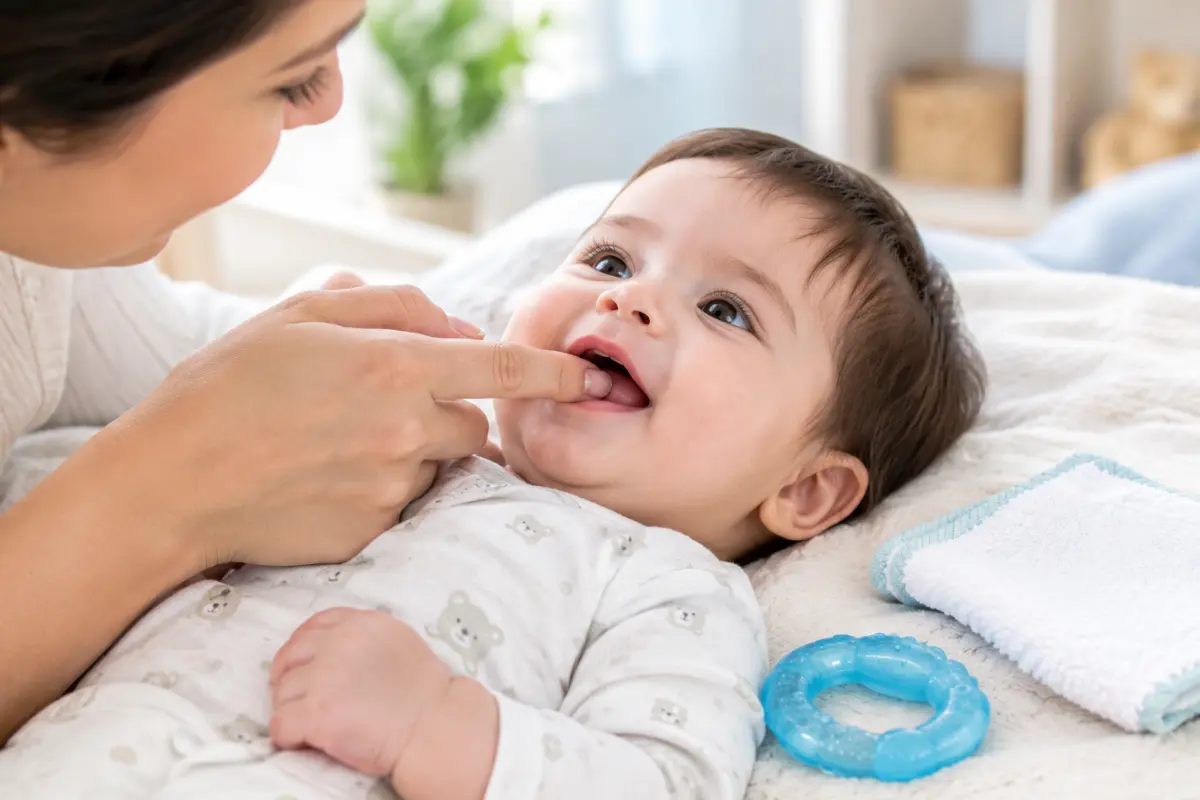
The American Academy of Pediatrics recommends simple measures such as gently massaging your baby’s gums and offering something cool to chew on to help ease teething discomfort.
Most babies can be comforted with simple, drug-free teething remedies. The goal is to reduce pressure and discomfort without introducing unnecessary risks.
Massage Your Baby’s Gums
Wash your hands and gently massage the sore area of your baby’s gums with a clean finger.
Gentle pressure can provide temporary relief when the gums feel tender. You don’t need to press hard. A slow, light massage is enough.
You can also use clean wet gauze if your baby prefers it. Always supervise your baby during any activity involving something they can chew.
Clean-finger gum massage is one of the simple approaches recommended by pediatric guidance for teething discomfort.
Offer a Chilled Teething Ring or Washcloth
A firm rubber teething ring can give your baby something safe to chew while providing a cool sensation against sore gums.
You can also chill a clean, damp washcloth and let your baby chew on it while supervised. Avoid anything that becomes extremely hard or could injure the gums.
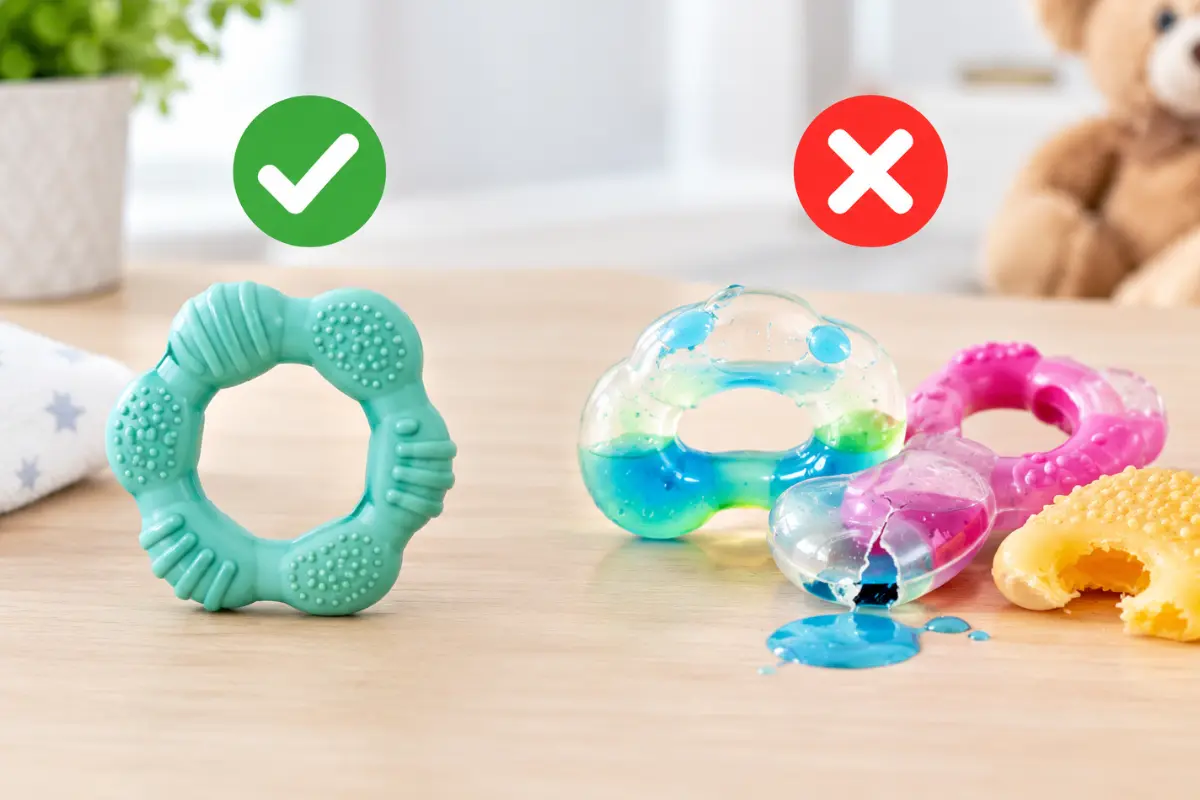
Don’t use teething rings filled with liquid that could leak if the product breaks. Solid teethers are a safer choice.
Give Your Baby Safe Things to Chew
Chewing can provide counter-pressure against tender gums, which may make your baby more comfortable.
Choose a teething toy designed for infants and check it regularly for cracks, broken pieces, or damage. Never give your baby a small object that could become a choking hazard.
If your baby has started eating solid foods, ask your pediatrician about age-appropriate chilled foods. Foods should be soft and prepared in a way that reduces choking risk.
The important point is that cold and safe are helpful; extremely hard objects are not.
What Pain Relief Is Safe for Teething Babies?
When non-medication methods aren’t enough and your baby appears genuinely uncomfortable, talk with your pediatrician about whether a pain reliever is appropriate.
The American Academy of Pediatrics notes that an occasional, weight-appropriate dose of acetaminophen may help a baby with significant teething discomfort. For babies older than 6 months, ibuprofen may also be an option when appropriate. Dosing should be based on the child’s age, weight, and the specific medicine.
Do not guess the dose or use medication more frequently than recommended.
It is also important to understand that numbing gels are not a good first-line teething remedy. Products containing benzocaine can cause serious problems in young children, while oral lidocaine can also cause severe harm if used incorrectly or swallowed. The FDA specifically warns against using benzocaine for teething pain in infants and young children.
For medication questions, especially when your baby is very young, speak with your pediatrician or another qualified healthcare professional.
Which Teething Remedies Should Parents Avoid?
Some products marketed as quick teething solutions can create more risk than relief.
Avoid giving your baby:
- Avoid benzocaine products: Parents should avoid benzocaine products for teething pain because the FDA warns that they can cause methemoglobinemia, a serious condition that reduces the blood’s ability to carry oxygen.
- Lidocaine products for teething: Oral viscous lidocaine can cause serious complications, including seizures, brain injury, and heart problems when used in young children.
- Homeopathic teething tablets or gels: Some products have been associated with potentially harmful ingredients, and they should not be relied on as a safe teething treatment.
- Teething necklaces and bracelets: These products can create choking and strangulation hazards and have not been shown to provide reliable teething pain relief.
- Alcohol on the gums: Never use alcoholic drinks or rubbing alcohol as a home remedy for teething.
- Very hard objects: Hard items can injure delicate gums or create a choking risk.
- Damaged teething toys: Throw away any teether that cracks, breaks, leaks, or develops loose pieces.
Be particularly cautious of products that promise to numb the gums quickly. A remedy being marketed for babies does not automatically mean it is safe for infants.
When Should You Call Your Baby’s Doctor?
Teething discomfort can usually be managed at home, but not every symptom that appears during teething is caused by teething.
Contact your baby’s healthcare professional if your child:
- Has a true fever
- Has persistent diarrhea
- Seems unusually ill or difficult to comfort
- Has significant trouble eating or drinking
- Shows signs of dehydration
- Has symptoms that are becoming worse
- Has pain or behavior that seems much more severe than expected
A baby can start teething and become sick at the same time. The appearance of a new tooth does not protect a child from ordinary infections.
If you’re unsure whether your baby’s symptoms are normal, it’s better to ask your pediatrician than to assume they are simply part of the teething process.
How Should You Care for Your Baby’s First Teeth?
Teething care doesn’t stop once the tooth appears. In fact, the arrival of the first tooth marks the beginning of your baby’s regular oral-care routine.
Once teeth erupt, brush them twice a day with a soft, age-appropriate toothbrush and a tiny smear of fluoride toothpaste. For children younger than 3 years, the amount should be about the size of a grain of rice.
You should also begin planning your baby’s first dental visit. The American Academy of Pediatric Dentistry recommends establishing a dental home within 6 months of the first tooth erupting and no later than your child’s first birthday.
The first visit gives the dentist an opportunity to check your baby’s developing teeth and gums, discuss fluoride, review brushing habits, and answer questions about feeding, pacifiers, and oral health.
Starting early makes dental care a normal part of your child’s routine rather than something that begins only after a problem develops.
Conclusion
Baby teething symptoms and remedies can be easier to manage when you know what is normal and which comfort measures are safe. Drooling, chewing, sore gums, and mild fussiness are common, while a true fever or significant illness should not simply be blamed on teething.
Start with simple options such as gentle gum massage and a safe chilled teething toy. Avoid benzocaine, lidocaine, homeopathic teething products, and teething jewelry. Once the first tooth appears, begin twice-daily brushing with a soft toothbrush and a tiny amount of fluoride toothpaste.
If your baby’s symptoms seem severe, unusual, or are getting worse, contact your pediatrician. Early dental care also gives you a chance to protect those first teeth from the beginning.
FAQs About Baby Teething Symptoms and Remedies
- 1 What are the first signs of teething in a baby?Common early signs include increased drooling, chewing, sore or tender gums, mild fussiness, and a desire to bite on safe objects. Some babies show very few symptoms.
- 2 How can I soothe my baby's teething pain naturally?Try gently massaging the gums with a clean finger or offering a firm teething ring or chilled washcloth. These simple approaches can provide temporary relief without medication.
- 3 Does teething cause a 100.4°F fever?No. A temperature of 100.4°F (38°C) or higher is considered a true fever and should not be blamed on teething. Your baby may have an illness or infection that needs medical evaluation.
- 4 Are teething necklaces safe for babies?No. Teething necklaces and similar jewelry can create choking and strangulation hazards. They also have not been shown to reliably relieve teething pain.
- 5 When should my baby first see a dentist?The first dental visit should take place by your baby's first birthday, and the AAPD recommends establishing a dental home within six months of the first tooth appearing.