
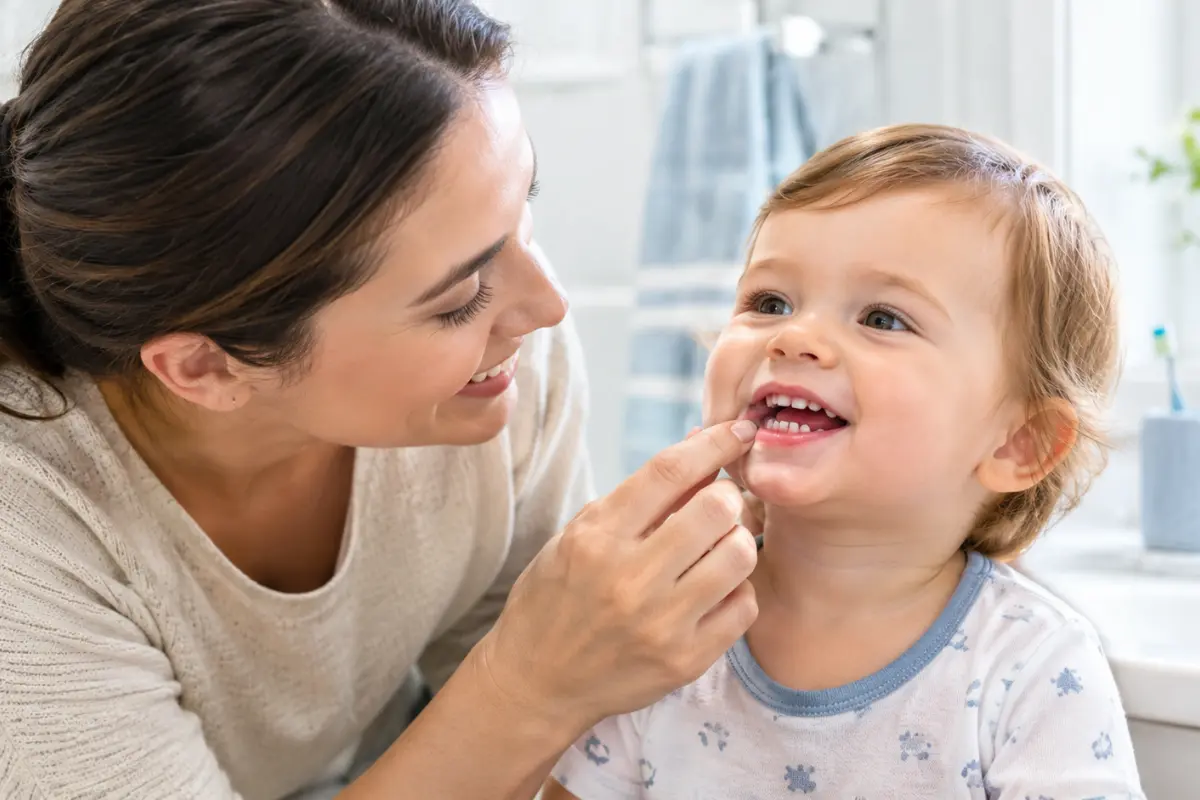
A Baby Teeth Eruption Chart helps parents understand when their child’s first teeth may appear and the usual order in which baby teeth come in. Most children begin getting their first tooth during infancy, but the exact timing can vary from child to child.
Seeing that first tiny tooth can be exciting, but it can also bring questions. Which tooth should come in first? When should all 20 baby teeth be visible? What if your baby’s teeth seem early or late?
This guide explains the baby teeth eruption timeline, including upper and lower teeth, common teething symptoms, delayed tooth eruption, permanent teeth, and everyday dental care. You’ll also find a simple baby teeth eruption chart by age to help you understand your child’s dental development.
What Is a Baby Teeth Eruption Chart?
A baby teeth eruption chart is a quick reference guide showing when primary teeth usually emerge through the gums. Eruption means that a tooth is coming through the gum and becoming visible in the mouth.
These charts are useful because baby teeth don’t all appear at the same time. Different types of teeth have different eruption ranges, and there can be normal variation between children.
The chart should be treated as a general timeline rather than a deadline. A baby may get a particular tooth somewhat earlier or later than the typical range and still have normal dental development.
How Many Baby Teeth Does a Child Have?
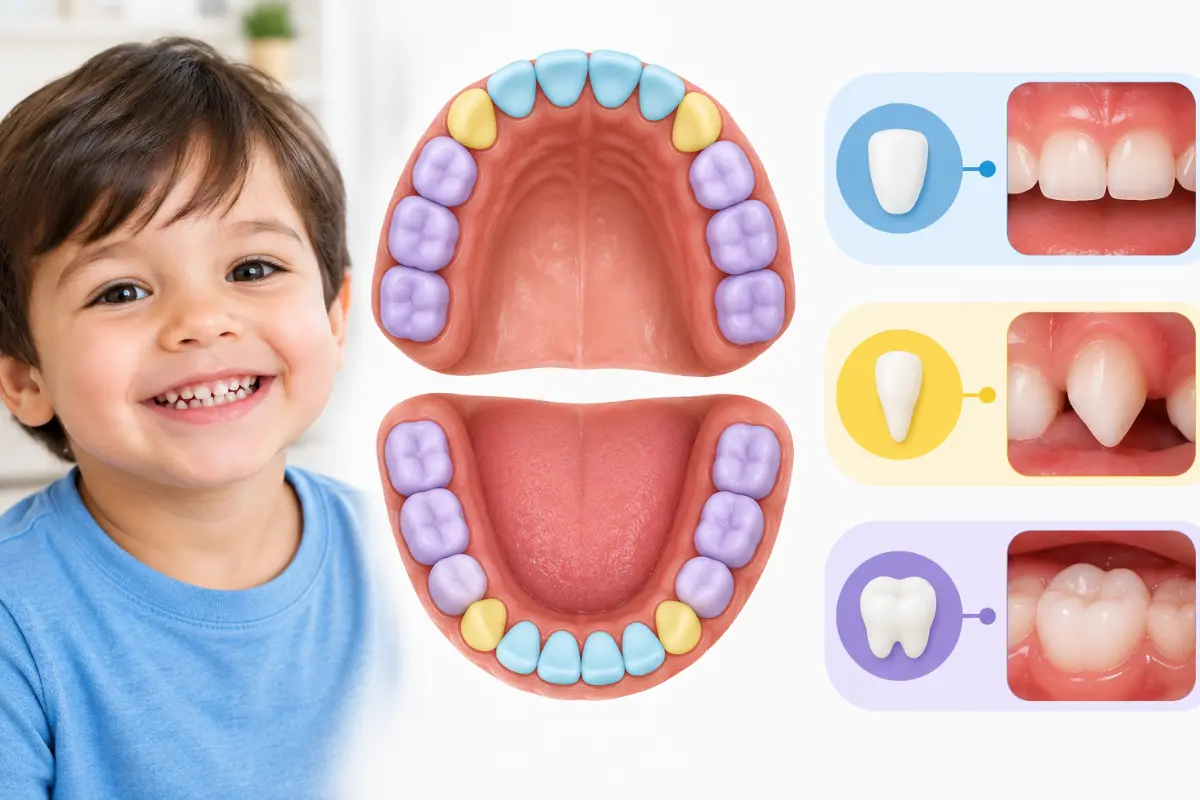
Children normally develop 20 primary teeth, often called baby teeth or milk teeth. There are 10 in the upper jaw and 10 in the lower jaw.
The 20 primary teeth include:
- 4 central incisors
- 4 lateral incisors
- 4 canines
- 4 first molars
- 4 second molars
These teeth help children bite and chew food and play an important role in speech. They also hold space for the permanent teeth that will eventually replace them.
When Do Babies Usually Get Their First Tooth?
Most babies begin teething around 6 months of age, although the timing varies. The lower central incisors are commonly among the first teeth to appear.
Some babies show a first tooth earlier, while others may not have one at exactly 6 months. The important point is that eruption follows a broad developmental range rather than one exact birthday.
Baby Teeth Eruption Chart by Age
The following baby teeth eruption chart uses the eruption ranges published by the American Dental Association. Upper and lower teeth don’t necessarily appear at exactly the same age.
| Baby Tooth | Upper Teeth | Lower Teeth |
|---|---|---|
| Central incisor | 8–12 months | 6–10 months |
| Lateral incisor | 9–13 months | 10–16 months |
| First molar | 13–19 months | 14–18 months |
| Canine | 16–22 months | 17–23 months |
| Second molar | 25–33 months | 23–31 months |
The ranges overlap, so don’t expect every child’s teeth to follow the same week-by-week pattern.
Baby Teeth Eruption Timeline
The typical baby teeth eruption timeline begins with the lower front teeth, followed by other incisors, first molars, canines, and finally second molars.
By around age 3, most children have a complete set of primary teeth. However, the timing can differ, so comparing your child with another baby isn’t always helpful.
Upper Baby Teeth Eruption
The upper central incisors commonly appear around 8 to 12 months. The upper lateral incisors generally follow around 9 to 13 months.
The first upper molars usually appear between 13 and 19 months, followed by the canines around 16 to 22 months. The upper second molars are usually among the last baby teeth to erupt, commonly appearing around 25 to 33 months.
Lower Baby Teeth Eruption
The lower central incisors often arrive first, usually around 6 to 10 months. The lower lateral incisors generally appear around 10 to 16 months.
The lower first molars typically appear around 14 to 18 months, while the lower canines commonly erupt around 17 to 23 months. Lower second molars generally appear around 23 to 31 months.
When Do Baby Teeth Come In?
Parents often search for answers to questions such as when do baby teeth come in or when do babies get teeth. There isn’t one exact age for every child, but the eruption process generally progresses throughout the first three years.
6 to 12 Months
This is when many babies begin getting their first teeth.
The lower central incisors are often the first to emerge, followed by the upper central and lateral incisors. During this stage, your baby may chew more, drool more than usual, or seem mildly uncomfortable around the gums.
Not having several teeth by the end of the first year does not automatically mean something is wrong. Dental development has a normal range.
12 to 18 Months
During this period, more incisors and the first molars commonly begin appearing.
Your child may now have several front teeth along with some early back teeth. As more teeth come in, brushing becomes an important part of the daily routine.
18 to 24 Months
Canines and additional molars commonly appear during this stage.
Your child may now have a mixture of front and back teeth. This can be a busy period for baby teeth eruption, so parents may notice intermittent gum discomfort as different teeth emerge.
2 to 3 Years
The second molars are usually among the final primary teeth to erupt.
By about age 3, most children have all 20 baby teeth. The complete set includes the front incisors, canines, and four sets of molars.
What Are the Signs of Teething?
Teething is a normal part of dental development, but symptoms can vary. Some babies have very little discomfort, while others become fussier when a tooth is breaking through the gum.
Common Teething Symptoms
Common signs may include:
- Increased drooling
- More chewing or biting
- Tender or swollen gums
- Mild gum discomfort
- Increased fussiness
- A rash around the mouth caused by drooling
The American Academy of Pediatrics notes that teething can cause gum tenderness, increased drooling, and chewing.
A true fever should not simply be blamed on teething. If your baby has a temperature of 100.4°F (38°C) or higher, the AAP advises considering another cause and contacting your pediatrician when appropriate.
How to Soothe a Teething Baby
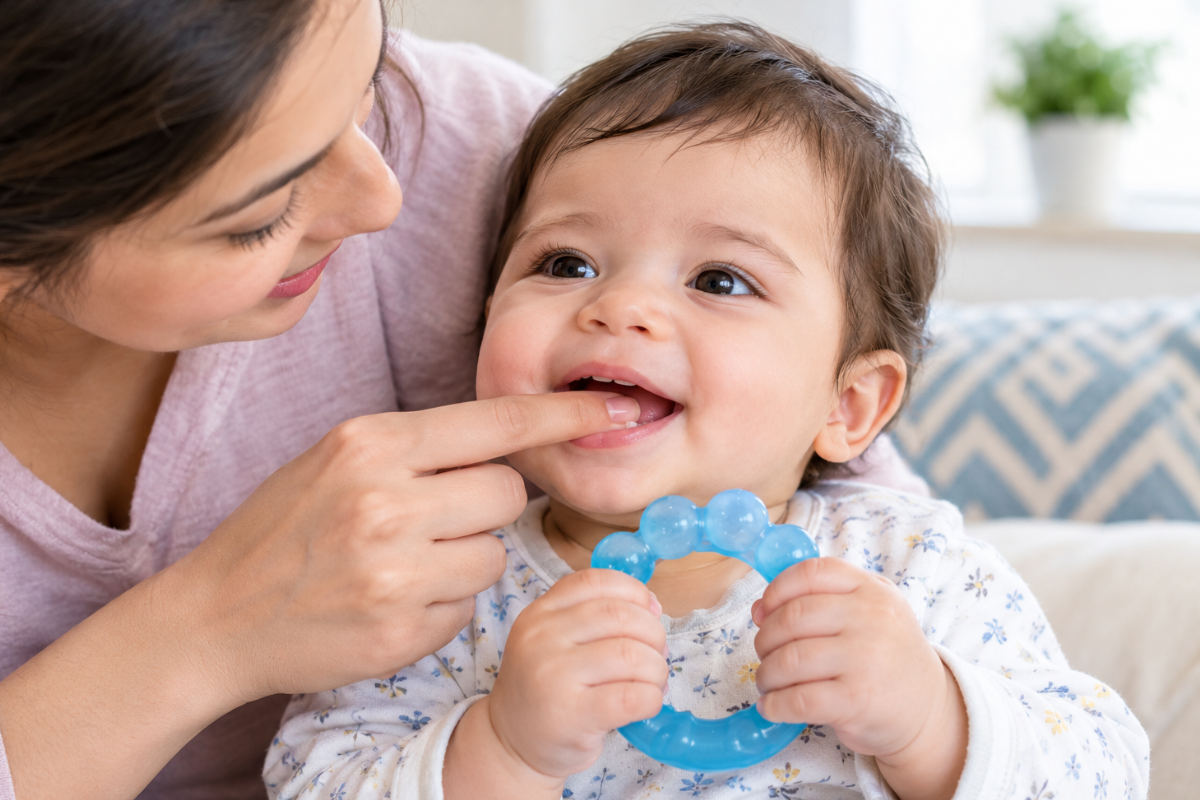
Simple measures can often make a teething baby more comfortable.
You can gently massage the gums with a clean finger or offer a chilled, solid teething ring. A clean cool or chilled washcloth may also provide relief.
Avoid giving babies hard foods or objects that could create a choking hazard. Teething necklaces should also be avoided because of serious safety risks.
If your baby seems unusually uncomfortable, talk with your pediatrician before using medication or any medicated teething product.
When Teething Symptoms May Need Medical Attention
Don’t assume every symptom occurring during teething is caused by the teeth.
Contact your child’s healthcare professional if your baby has a true fever, seems very ill, has significant or persistent symptoms, or you are concerned that something isn’t right.
The reason is simple: babies begin teething during an age when infections and other illnesses are also common. Treating every symptom as teething can delay appropriate care.
What If My Baby’s Teeth Are Not Coming In on Time?
Parents often become worried when their baby’s teeth are not coming in according to an online chart. In most cases, an eruption chart is a guide, not a strict schedule.
Is Delayed Tooth Eruption Normal?
Some variation in baby teeth eruption age is normal.
One child may get the first tooth earlier than another child, while both may have healthy dental development. Even the order and timing can vary within the normal range.
Instead of focusing on one exact month, look at the overall pattern of development and discuss concerns with your child’s dentist.
When Should Parents Talk to a Dentist?
Your child should have a dental home early in life. The American Academy of Pediatrics and American Academy of Pediatric Dentistry recommend establishing dental care by age 1, with the first dental visit after the first tooth appears and no later than the first birthday.
A dentist can examine your child’s mouth and determine whether tooth eruption appears appropriate for that individual child.
What Can Affect Tooth Eruption?
Tooth eruption can vary because children develop at different rates. Genetics and overall dental development can influence timing.
Certain medical or developmental conditions can also affect tooth development or eruption. That’s why a professional examination is more useful than comparing your child with another child’s baby teeth chart by age.
Baby Teeth vs Permanent Teeth: What’s the Difference?
Baby teeth are temporary, but that doesn’t make them unimportant. They are part of normal dental development and help prepare the mouth for the permanent dentition.
Primary Teeth
Primary teeth are the first set of teeth. A child normally has 20 of them.
They help with chewing and speech and maintain space in the jaws for developing permanent teeth.
Permanent Teeth
Most people eventually develop 32 permanent teeth, including incisors, canines, premolars, molars, and third molars.
Permanent teeth are designed to last much longer, which is why caring for baby teeth still matters. Cavities or other problems in primary teeth can cause pain and may interfere with a child’s ability to eat, speak, or function comfortably.
When Do Baby Teeth Start Falling Out?
Baby teeth usually begin to loosen and fall out around age 6, although timing varies.
This period is sometimes called mixed dentition because a child has both primary and permanent teeth. The permanent teeth gradually replace the baby teeth as the child grows.
Permanent Teeth Eruption Chart
After the baby teeth eruption stages are complete, the next major stage is the eruption of permanent teeth.
Permanent tooth eruption happens over several years rather than all at once.
Upper Permanent Teeth
Typical upper permanent eruption ages include:
| Tooth | Typical Age |
|---|---|
| Central incisor | 7–8 years |
| Lateral incisor | 8–9 years |
| First premolar | 10–11 years |
| Second premolar | 10–12 years |
| Canine | 11–12 years |
| Second molar | 12–13 years |
| Third molar | 17–21 years |
Lower Permanent Teeth
| Tooth | Typical Age |
|---|---|
| First molar | 6–7 years |
| Central incisor | 6–7 years |
| Lateral incisor | 7–8 years |
| Canine | 9–10 years |
| First premolar | 10–12 years |
| Second premolar | 11–12 years |
| Second molar | 11–13 years |
| Third molar | 17–21 years |
These are general eruption ranges, not exact deadlines. Individual development can vary.
When Do Permanent Teeth Usually Come In?
The first permanent molars and lower central incisors commonly appear around age 6. The remaining permanent teeth then erupt in stages throughout childhood and adolescence.
This is one reason regular dental visits are useful. A dentist can monitor eruption and identify problems such as crowding, unusual eruption patterns, or teeth that aren’t developing as expected.
What About Wisdom Teeth?
Wisdom teeth are the third molars. They commonly develop and erupt during the late teenage years or early adulthood.
Not everyone has enough room for wisdom teeth to erupt normally. Some remain impacted or cause problems, so a dentist can monitor their development and recommend appropriate care if necessary.
How to Care for Your Child’s Teeth During Eruption
Good oral hygiene should begin early rather than waiting until all the baby teeth appear.
When Should You Start Brushing Baby Teeth?
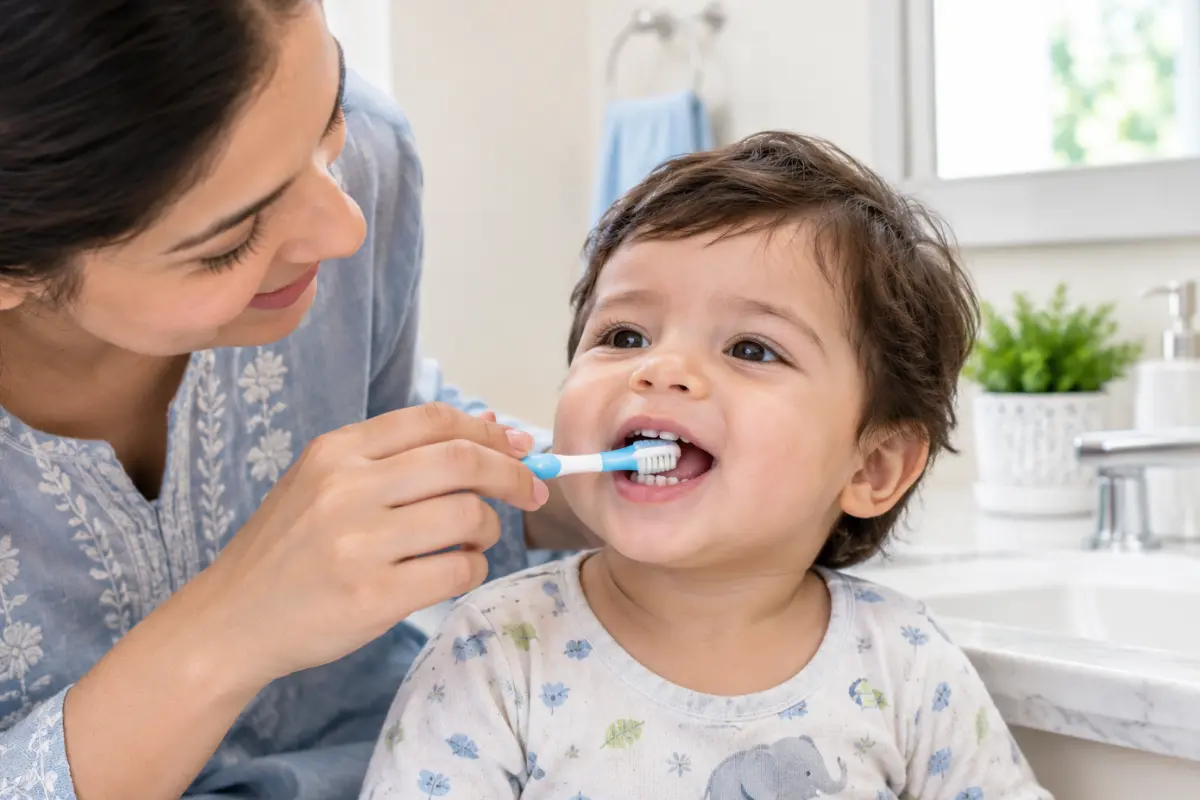
Start cleaning the mouth before teeth appear by gently wiping the gums with a clean, soft cloth.
Once the first tooth appears, begin cleaning it regularly with an appropriate soft toothbrush. CDC guidance recommends brushing children’s teeth twice a day and seeing a dentist by the first birthday.
Choosing a Toothbrush and Fluoride Toothpaste
Choose a small, soft-bristled toothbrush designed for your child’s age.
For fluoride toothpaste, follow current professional guidance and your child’s dentist or doctor. CDC guidance says children younger than 2 should first be evaluated with their doctor or dentist regarding fluoride toothpaste, while children should use only a small amount appropriate for their age.
For children under 3, CDC guidance describes a rice-grain-sized smear. From ages 3 to 6, use no more than a pea-sized amount and supervise brushing so the child learns to spit rather than swallow the toothpaste.
When Should Children Start Flossing?
Flossing becomes important when your child’s teeth touch each other and a toothbrush can no longer clean effectively between them.
You don’t have to wait until all 20 baby teeth are present. If two teeth are touching, ask your child’s dentist about the best way to clean between them.
When Should Your Child Have Their First Dental Visit?

Don’t wait until your child has a full set of teeth.
The AAP and AAPD recommend a first dental visit after the first tooth appears and no later than the first birthday. Early dental visits allow the dentist to monitor dental development, discuss oral hygiene, and identify potential problems early.
When Should You Worry About Your Child’s Tooth Eruption?
An online tooth eruption chart can help you understand normal patterns, but it cannot diagnose a dental problem.
A Tooth Is Much Earlier or Later Than Expected
A tooth appearing slightly earlier or later than a chart’s range does not automatically mean there is a problem.
However, if you have a persistent concern about delayed tooth eruption, missing teeth, or an unusual pattern, mention it during your child’s dental visit.
Teeth Are Erupting in an Unusual Pattern
Children don’t always follow a perfectly predictable sequence.
A dentist can evaluate whether the eruption pattern is appropriate and check for issues such as lack of space, abnormal tooth development, or another underlying concern.
Pain, Swelling, or Other Concerning Symptoms
Mild gum discomfort can occur during teething, but severe or persistent pain, significant swelling, bleeding, pus, facial swelling, or a child who appears seriously unwell should not automatically be considered normal teething.
Seek professional advice when symptoms seem unusual or severe.
Final Thoughts
The most important thing is to watch your child’s overall dental development, begin oral care early, and establish a dental home by the first birthday. If a tooth appears much earlier or later than expected, or you notice unusual pain, swelling, or an eruption pattern that concerns you, your child’s dentist can provide personalized guidance.
A Baby Teeth Eruption Chart is a helpful way to understand when your child’s teeth may appear, but it shouldn’t be treated as a strict schedule. Most children begin getting teeth during infancy and have all 20 primary teeth by around age 3.
FAQs About Baby Teeth Eruption
- 1. When do babies usually get their first tooth?Many babies get their first tooth around 6 months, but normal timing varies. The lower central incisors are commonly among the first teeth to appear.
- 2. How many baby teeth does a child have?Children normally have 20 primary teeth—10 in the upper jaw and 10 in the lower jaw.
- 3. What is the normal baby teeth eruption timeline?Baby teeth generally begin appearing during the first year and continue erupting until around age 3. The exact timing varies by child.
- 4. What if my baby has no teeth by 12 months?A baby without a tooth by 12 months may still develop normally, but it's a good time to discuss your child's dental development with a dentist, especially if you have other concerns.
- 5. When do baby teeth start falling out?Baby teeth commonly begin falling out around age 6 as permanent teeth start replacing them. The exact timing varies.
- 6. Does teething cause fever?
A true fever is not considered a normal symptom of teething. If your baby has a temperature of 100.4°F (38°C) or higher, consider another cause and contact your pediatrician when appropriate.